Here is the uncomfortable thing about a machine that's good at pastiche: it is good at pastiche of work that isn't yours. Ask for the game you're nostalgic for and you might get a polite refusal, or a vague gesture at the genre, or (often enough to matter) something close enough to the original that you close the tab.
That inconsistency is the whole problem, and it's why the rule has to live in the product rather than in the model.
Is it legal to make a game with AI?
Yes. No law in the US, the UK or the EU stops you making, publishing or selling a game built with AI tools, and Steam, the App Store, Google Play and itch.io all accept them, with disclosure where the store asks for it. The legal risk sits where it always has: in copying someone else's characters, art or name.
Two narrower points are worth knowing. Purely machine-generated material may not be registrable for copyright in the US, which matters if you plan to defend the game against copies rather than to ship it. And the tool's own terms decide who owns the output, so read them before you build something you hope to sell. The rest of this post is about the first risk, because it is the one a generative tool makes easy to walk into.
The line is old and it survives generative tooling intact
Copyright protects expression, not ideas. In games that translates into a distinction that has been stress-tested for forty years:
| Open | Protected |
|---|---|
| Genres and formats | Characters and their designs |
| Mechanics and rules | Artwork, sprites, models, textures |
| Control schemes | Music and sound effects |
| Systems and progression structures | Dialogue, story, names |
| Camera and perspective conventions | Logos and titles (also trademarks) |
| Visual eras and technical constraints | Specific level layouts |
This is why there are hundreds of legitimate battle royales, match-three puzzlers and auto-battlers. Nobody owns "shrinking circle, hundred players". Someone very much owns the specific character standing in it.
Generative tooling doesn't move that line. It just makes crossing it effortless, and it makes crossing it accidentally much more likely, because you never see the intermediate step where a human would have noticed they were tracing.
Why models are inconsistent about this
It's tempting to assume a refusal means the model has a list of protected works and checks against it. It doesn't. Refusals come out of safety training that is probabilistic and context-sensitive, so the same request can be declined outright, partly honoured, or fulfilled in detail depending on how it was phrased, what came before it in the conversation, and which model version answered.
The practical consequences:
- A refusal is not a guarantee the same request fails tomorrow.
- Compliance is not a signal that a request was fine: the model is not making a legal judgment.
- Rephrasing until it works is not a clever workaround. It is the same request with the safety signal filed off, and the output is no more yours than it was the first time.
Any product that generates shareable artifacts therefore needs its own rule, applied consistently, rather than treating whatever the model happened to do as the policy.
"In the spirit of" is the useful prompt shape
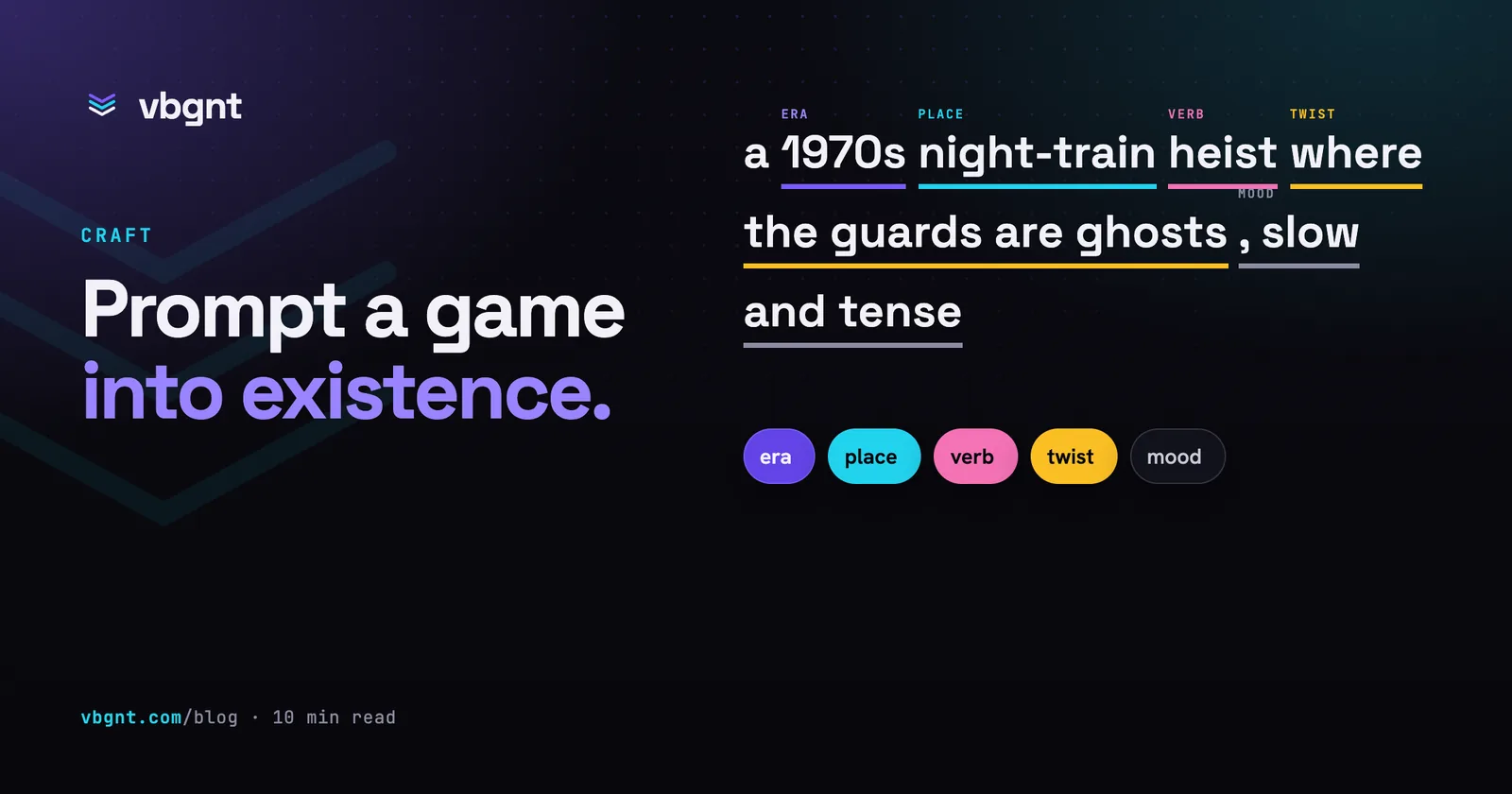
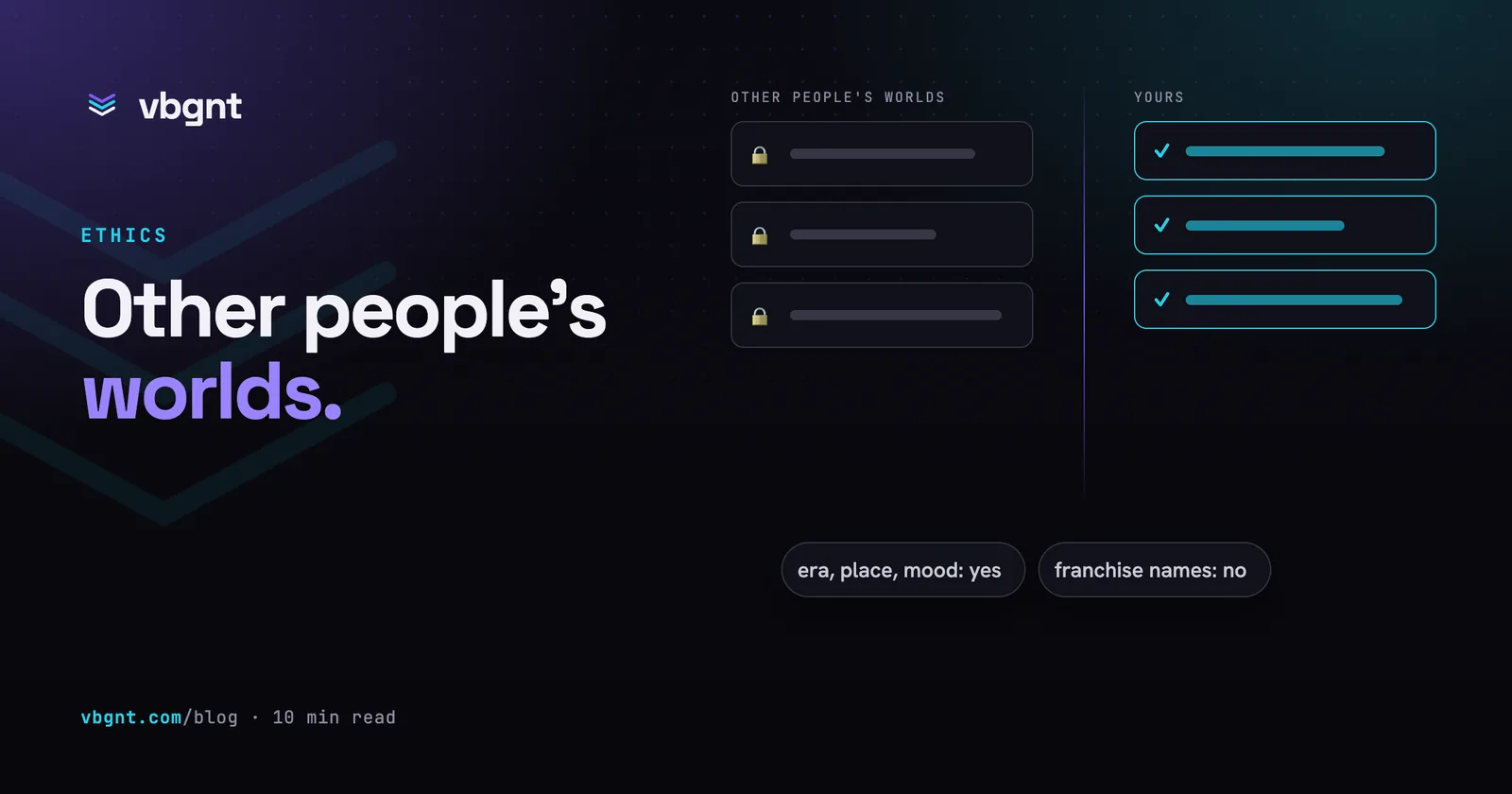
The good news is that the constraint costs you almost nothing, because a franchise name was never the efficient way to get what you wanted anyway. What you actually want is an era and a texture, and those are unowned, specific, and produce better results.
| Instead of | Ask for |
|---|---|
| A named 16-bit mascot platformer | "A 16-bit mascot platformer: spin attack, parallax jungle, collectible rings of my own design, attitude-era animation" |
| A named kart racer | "A kart racer with drift-charged boost, item pickups, rubber-banding AI, bright toy-plastic art" |
| A named FMV adventure | "Sega-CD-era FMV pastiche: grainy compressed video, over-saturated menus, branching choices with a countdown" |
| A named dungeon crawler | "Early-Bullfrog isometric: tiny sprites, absurd tile detail, systems that misbehave in interesting ways" |
Every right-hand column entry produces a better first build than the left-hand one, because it names mechanics and constraints instead of assuming the machine shares your memory of a specific game. Specificity about properties beats specificity about property.
Publishability is the real constraint
The rule that makes all of this concrete isn't legal, it's practical: a game you cannot share is not a game. It's a screenshot.
This studio's output is a public URL you send to people. That single fact resolves most of the ambiguity, because it forces the question early: can you put your name on this, put it in a group chat, leave it up for a year? If the answer depends on nobody important noticing, the machine built you something you can't use, however well it plays.
Framing it that way also stops the conversation from being moralistic. It's not "you mustn't". It's "this doesn't produce the thing you came here for".
What about the training data question?
Worth naming honestly rather than skipping: the models generating this code and art learned from enormous corpora of existing work, and the law around that is genuinely unsettled, with active litigation and no stable answer yet.
What we can control is the output side, and that's where a product's responsibility actually bites: don't produce artifacts that reproduce identifiable protected expression, and don't build flows that encourage users to try. A studio that refuses to generate a specific famous character but happily generates its logo has not implemented a policy: it has implemented a speed bump.
A short working rule
- Genres, mechanics, eras and technical constraints: open. Use them freely and specifically.
- Characters, art, music, names and titles from existing works: not yours, no matter how the request was phrased.
- If a refusal shows up, treat it as information rather than an obstacle to route around.
- Ask of every game: could you put this on the internet under your own name for a year? If not, ask for a different one, it'll be better anyway.
Frequently asked questions
Can I legally make a game with AI that copies another game?
You can copy the mechanics; you cannot copy the expression. Game rules, genres and systems are not protected by copyright, which is why there are hundreds of legitimate battle royales and match-three puzzlers. Characters, artwork, music, dialogue, level layouts and names are protected, and a generated game reproducing them is infringing regardless of which tool produced it.
Why do AI models sometimes refuse and sometimes reproduce famous characters?
Because refusals come from safety training that is probabilistic rather than a lookup table of protected works. The same request can be declined, partly honoured, or fulfilled in detail depending on phrasing, context and model version. That inconsistency is exactly why a product that generates shareable games has to enforce its own rule rather than relying on the model to enforce one.
What does 'in the spirit of' mean for a game prompt?
Naming an era, a technical constraint and a texture instead of a franchise: 'a 16-bit mascot platformer with a spin attack and parallax jungle backdrops' rather than a specific character's name. You get the feeling you were actually after, and you get a game you can put on the internet under your own name.
Is it legal to make a game with AI?
Yes. No law in the US, the UK or the EU stops you making, publishing or selling a game built with AI tools, and the major stores accept them with disclosure where asked. The legal risk is the familiar one: copying someone else's characters, art or name. Purely machine-generated material may not be registrable for copyright in the US, and the tool's terms decide who owns the output.