Claude Code for game development, from 50+ games
Claude Code builds every game in the vbgnt studio. Here is which engine to give it, how to set it up, and the failures that only show up in production.
Notes from building a studio where the brief is a sentence and the output is a playable build: what to put in a prompt, what the agent needs around it, how a build gets tested before you see it, and where the line sits on other people's worlds.
Claude Code builds every game in the vbgnt studio. Here is which engine to give it, how to set it up, and the failures that only show up in production.
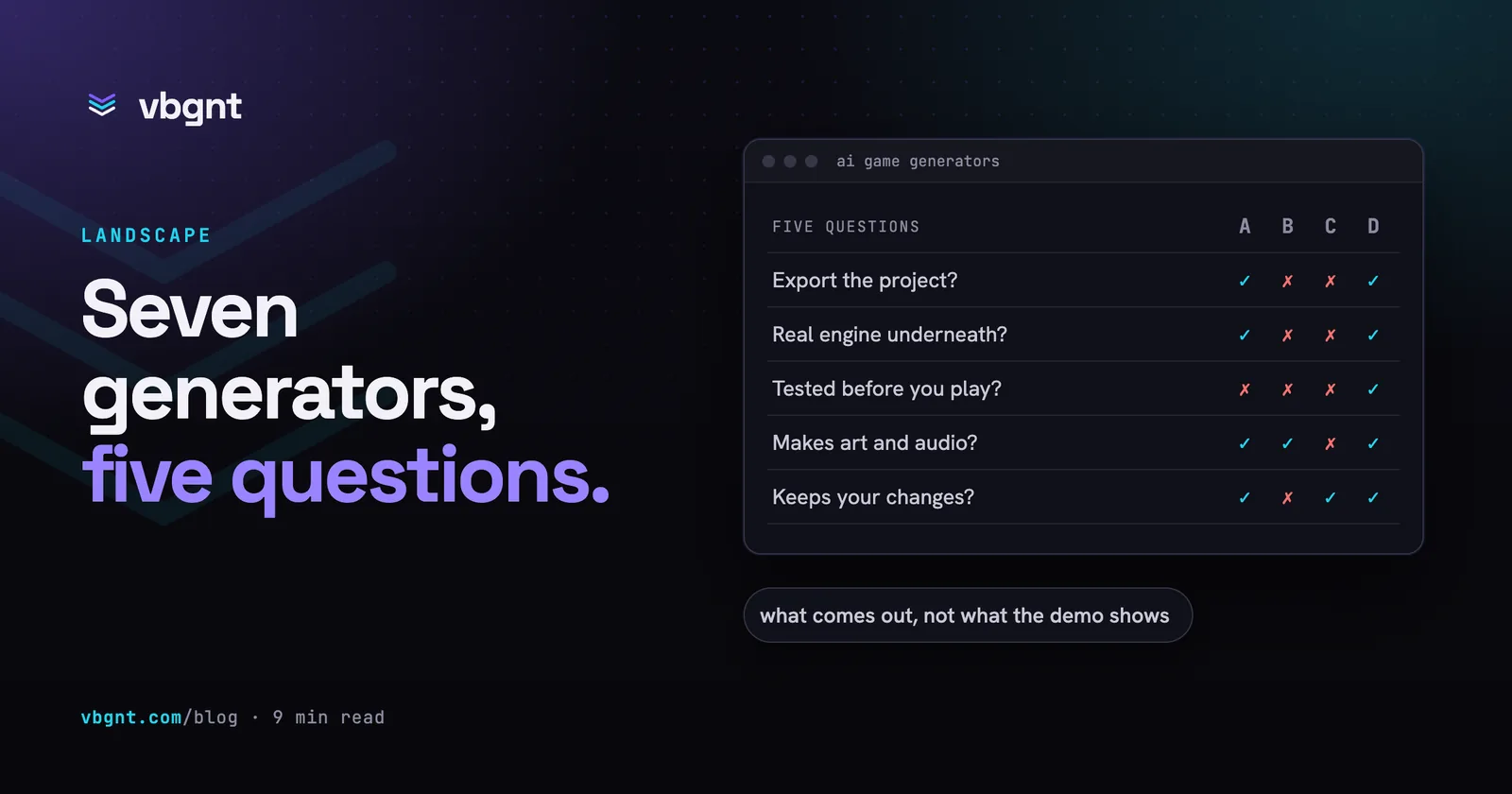
Rosebud, Star, Astrocade, Tesana, GDevelop, Replit and vbgnt, judged on the same five questions, with every price taken from the vendor's own page.
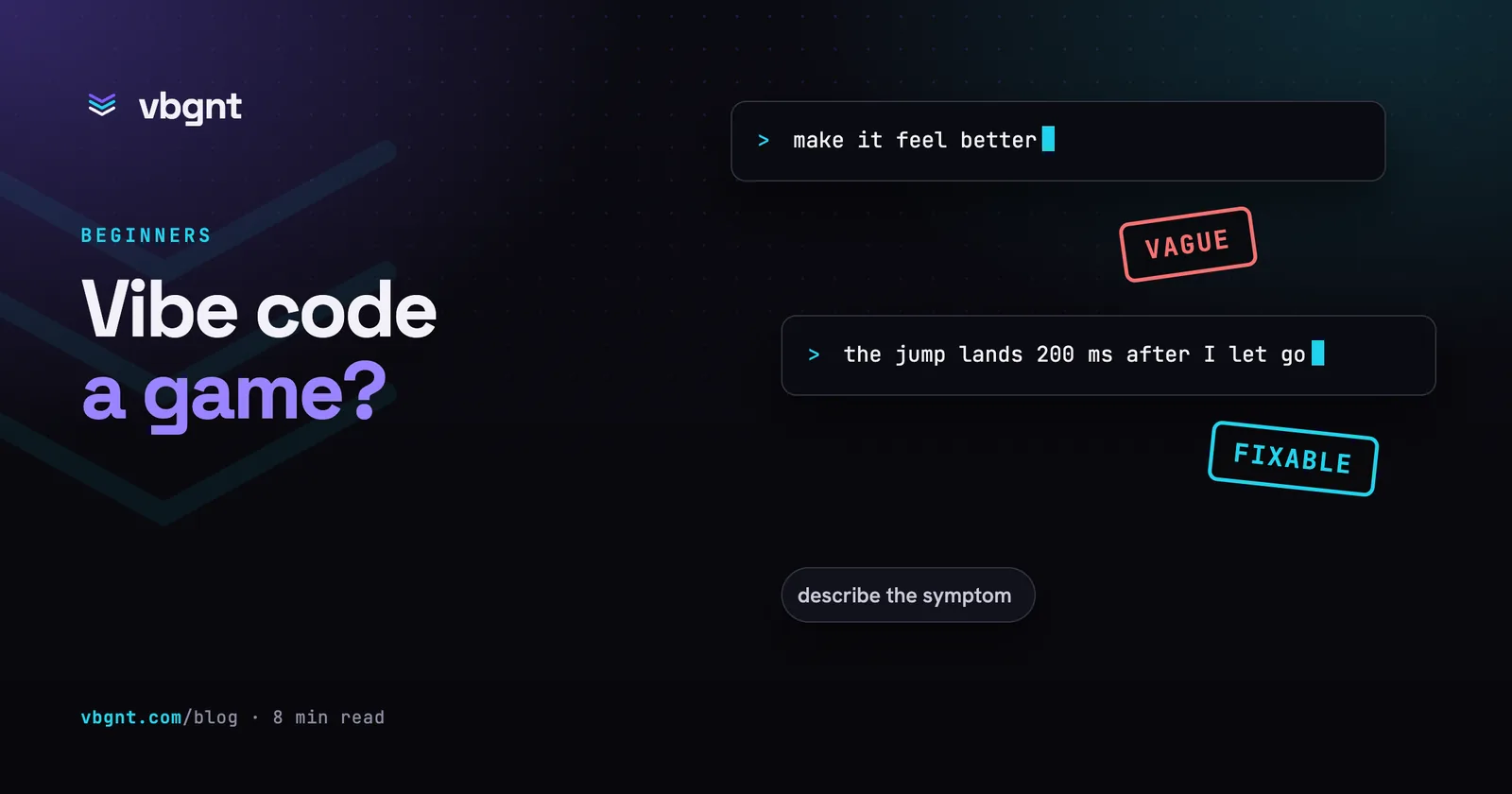
Yes, if it is small. Two Vibe Jams and nearly 2,000 games show what vibe coding makes, where it breaks, and how to do it so the game works.
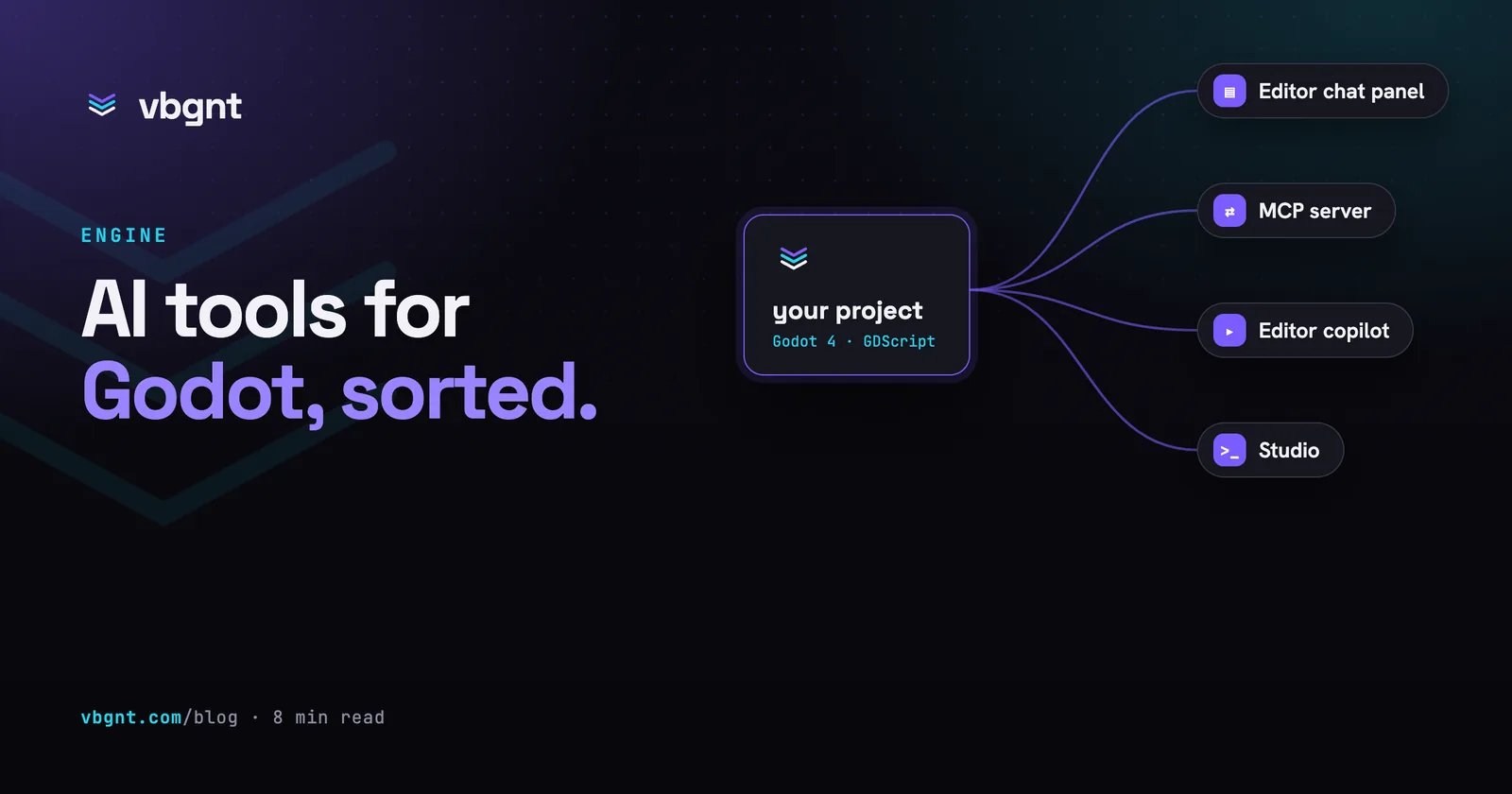
Godot has no AI assistant of its own. Here is what the MCP servers, editor plugins and studios actually do, and how to tell a useful one from a chatbot.
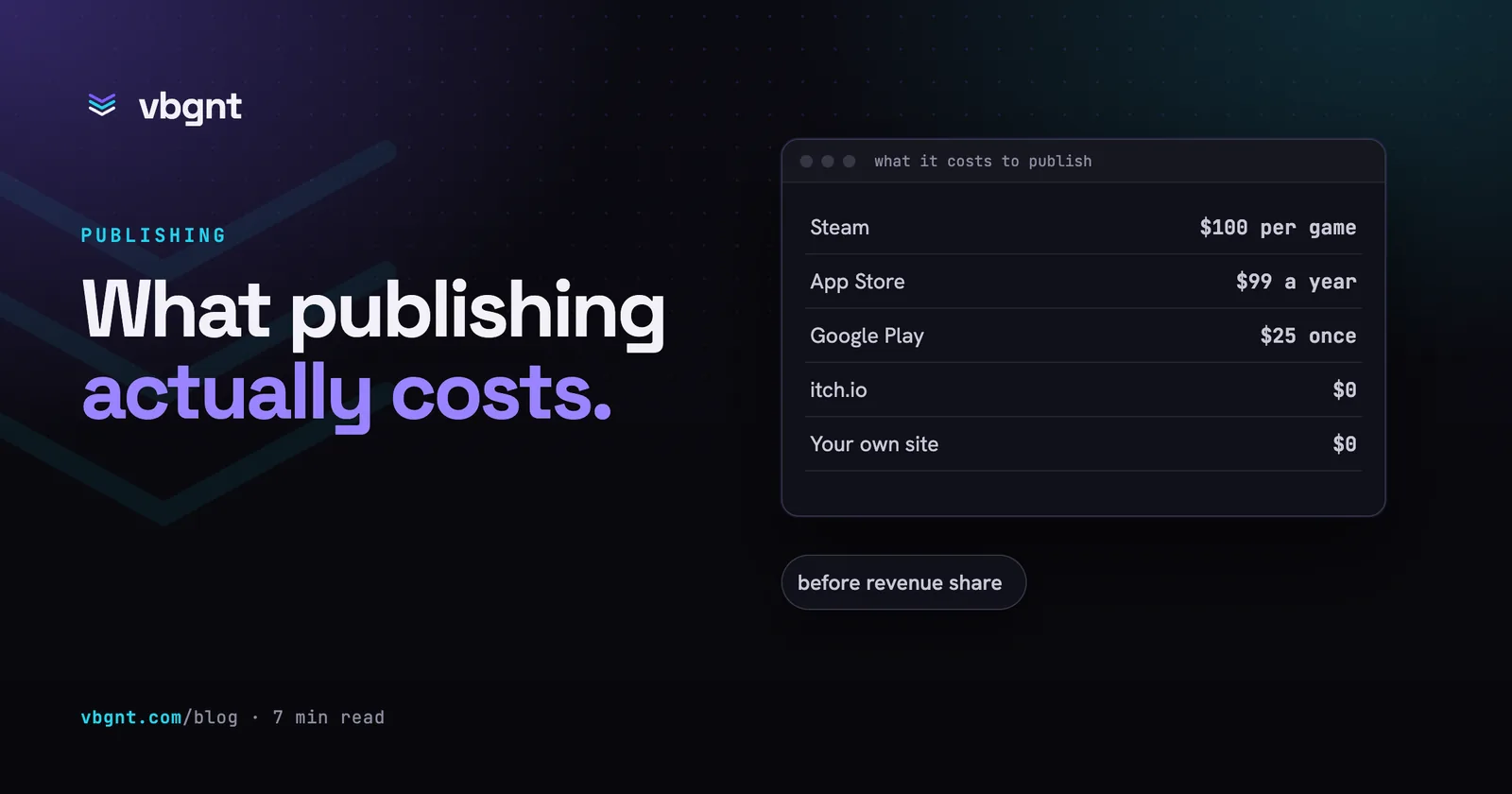
Between nothing and $100 up front, then a share of sales. Every store's fee in one table, and the costs that are not on any pricing page.
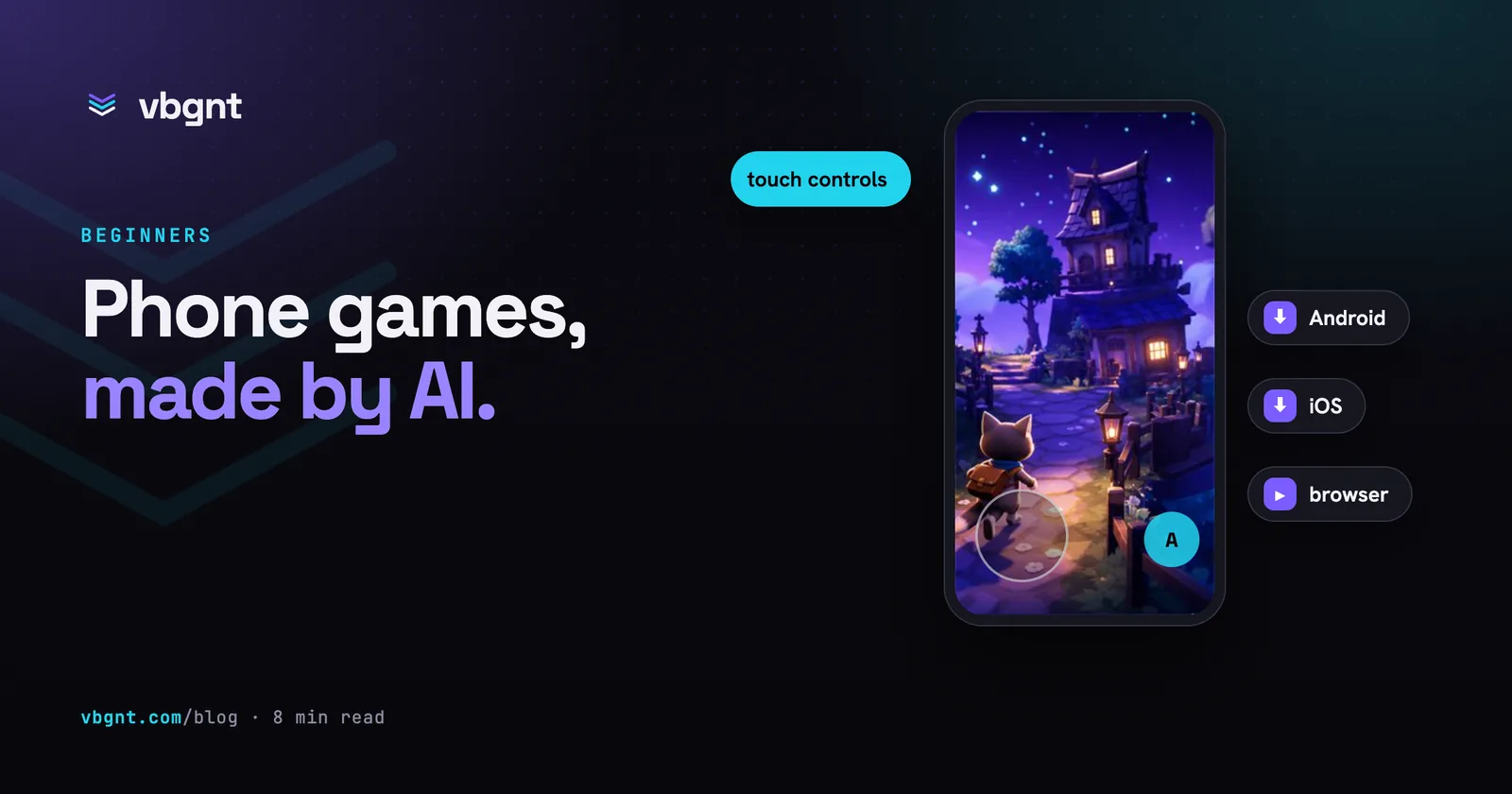
Three routes, ending in three different places: a game inside an app, a web game on any phone, or a real app on Google Play and the App Store.
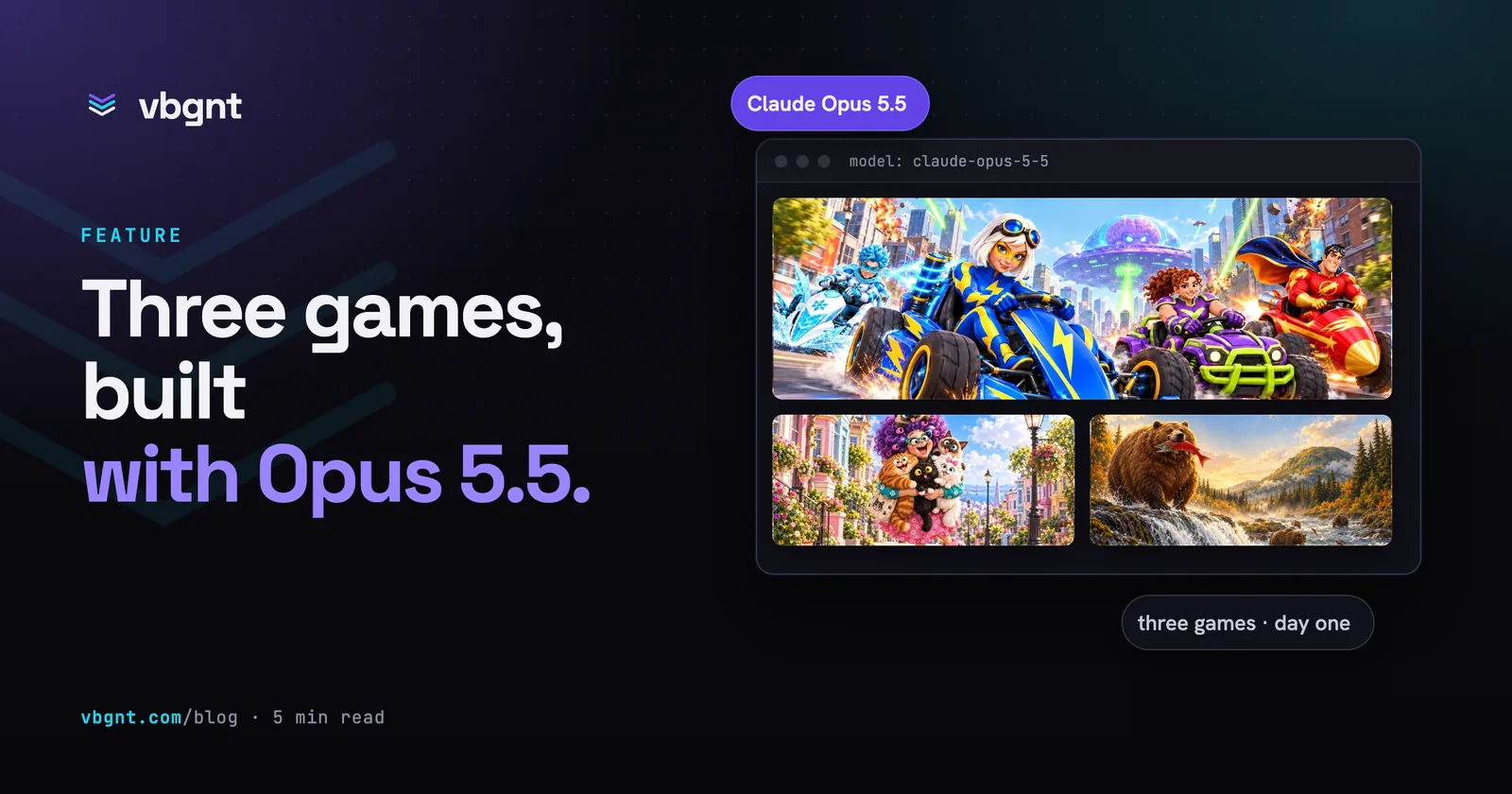
Claude Opus 5.5 is now live in the studio model picker. On day one we used it to build Kartropolis, Cat Person, and Fat Bear Week.
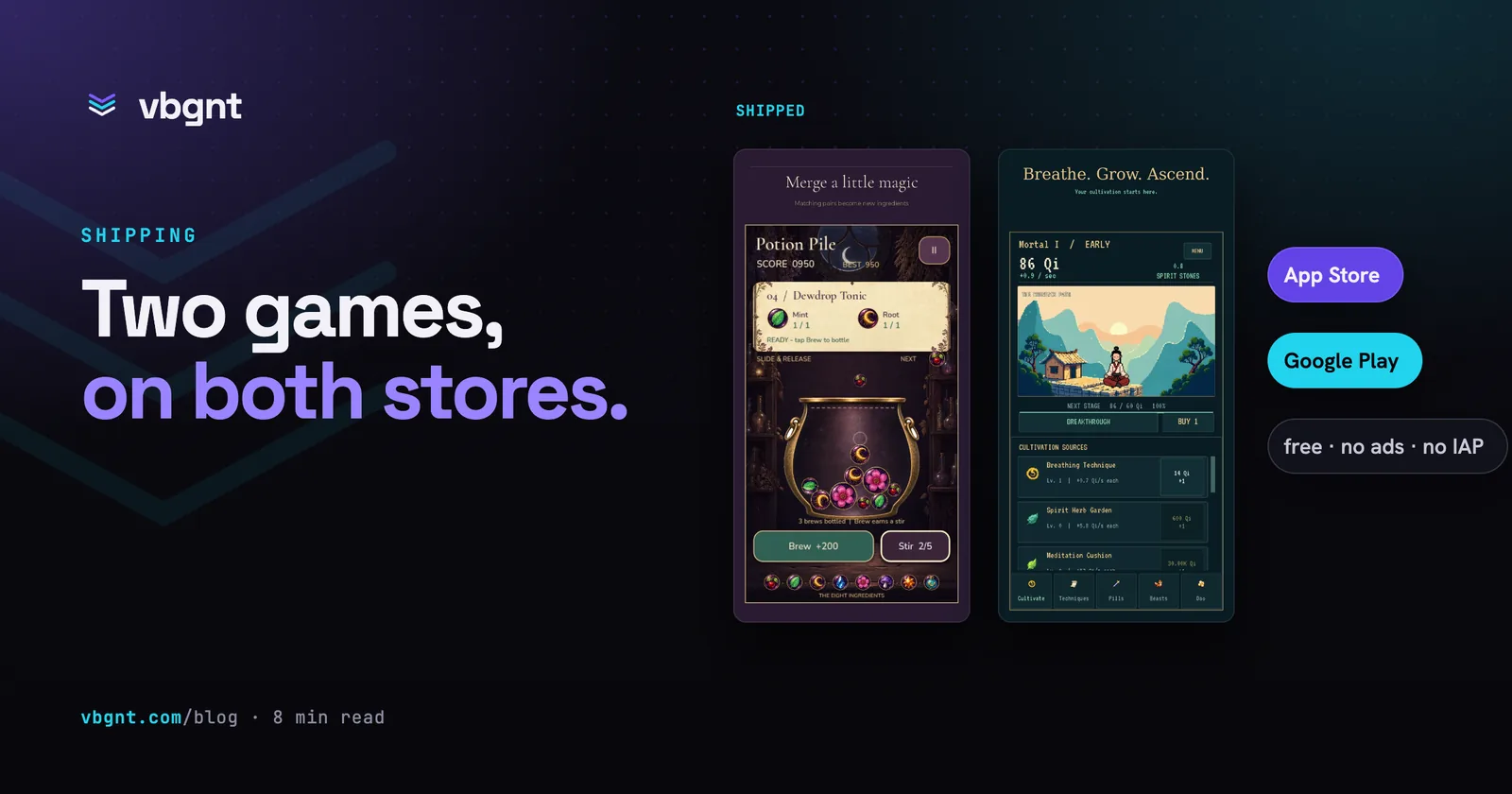
Potion Pile and Nine Heavens Ascent were written, illustrated, playtested, packaged and listed by the studio, then submitted by one person who wrote none of their code. Here is the division of labour, the step that still needs a Mac, and the one thing the agent refused to fake.
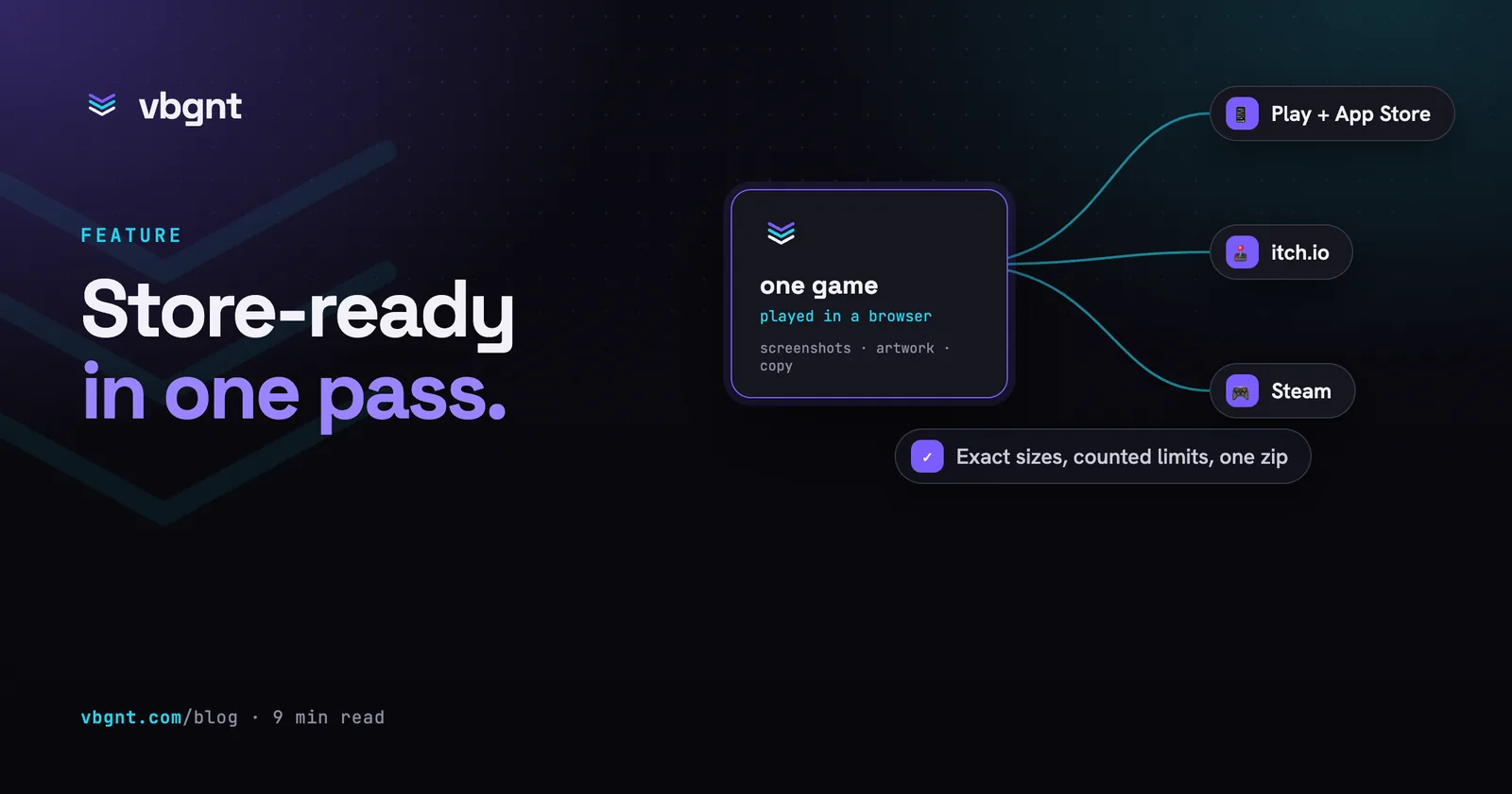
Tick the stores you want and the agent plays your game, captures real screenshots at every size they demand, composes the icons, capsules and feature graphics, and writes the listings within their limits. Browse the kit in the studio, download it as one zip, or publish the game's own page from it.
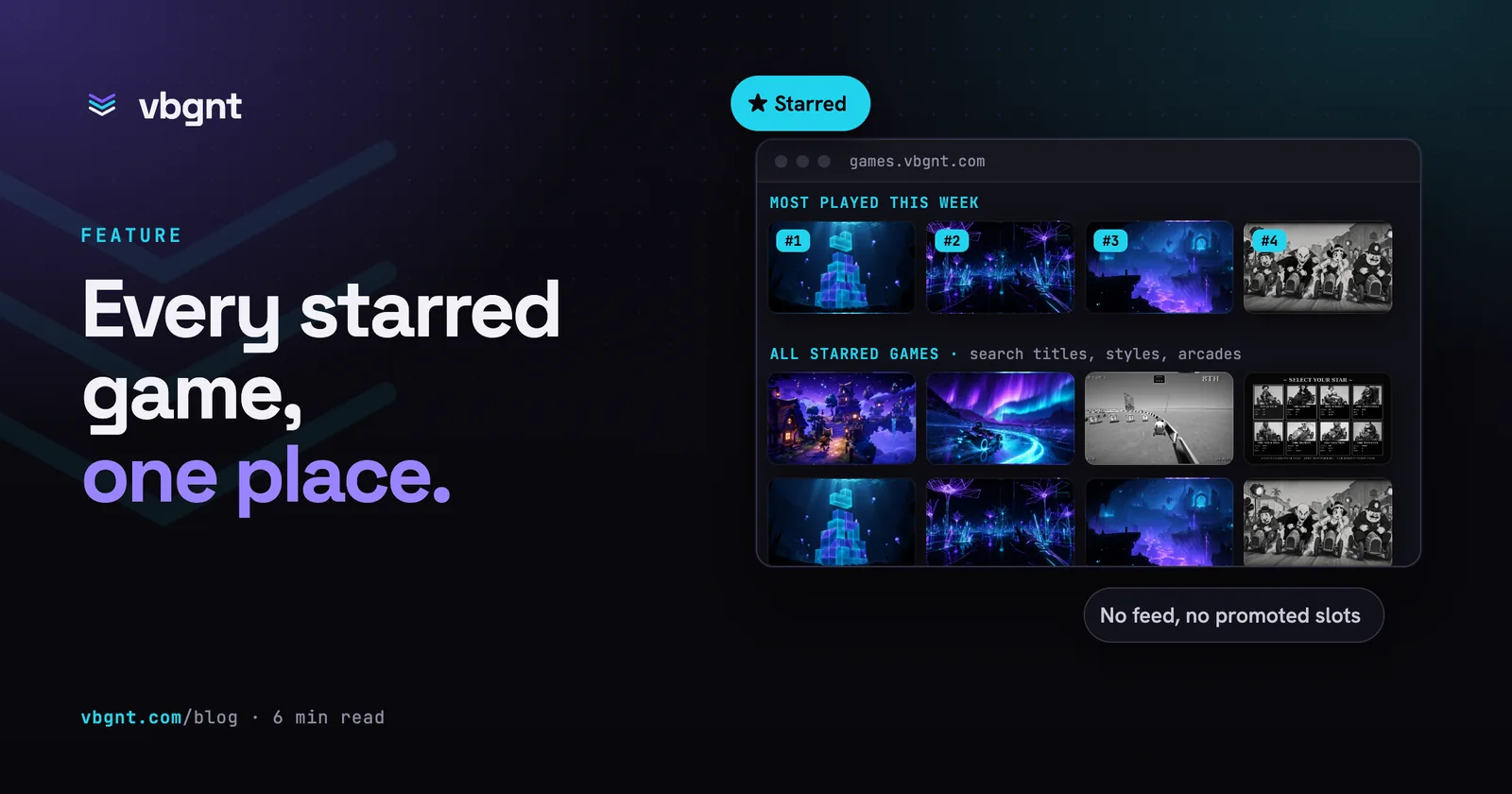
games.vbgnt.com now lists the games players starred across every arcade, ranked by what is being played this week, with search over titles, descriptions and styles. Opt-in per game, and your arcade stays exactly as it was.
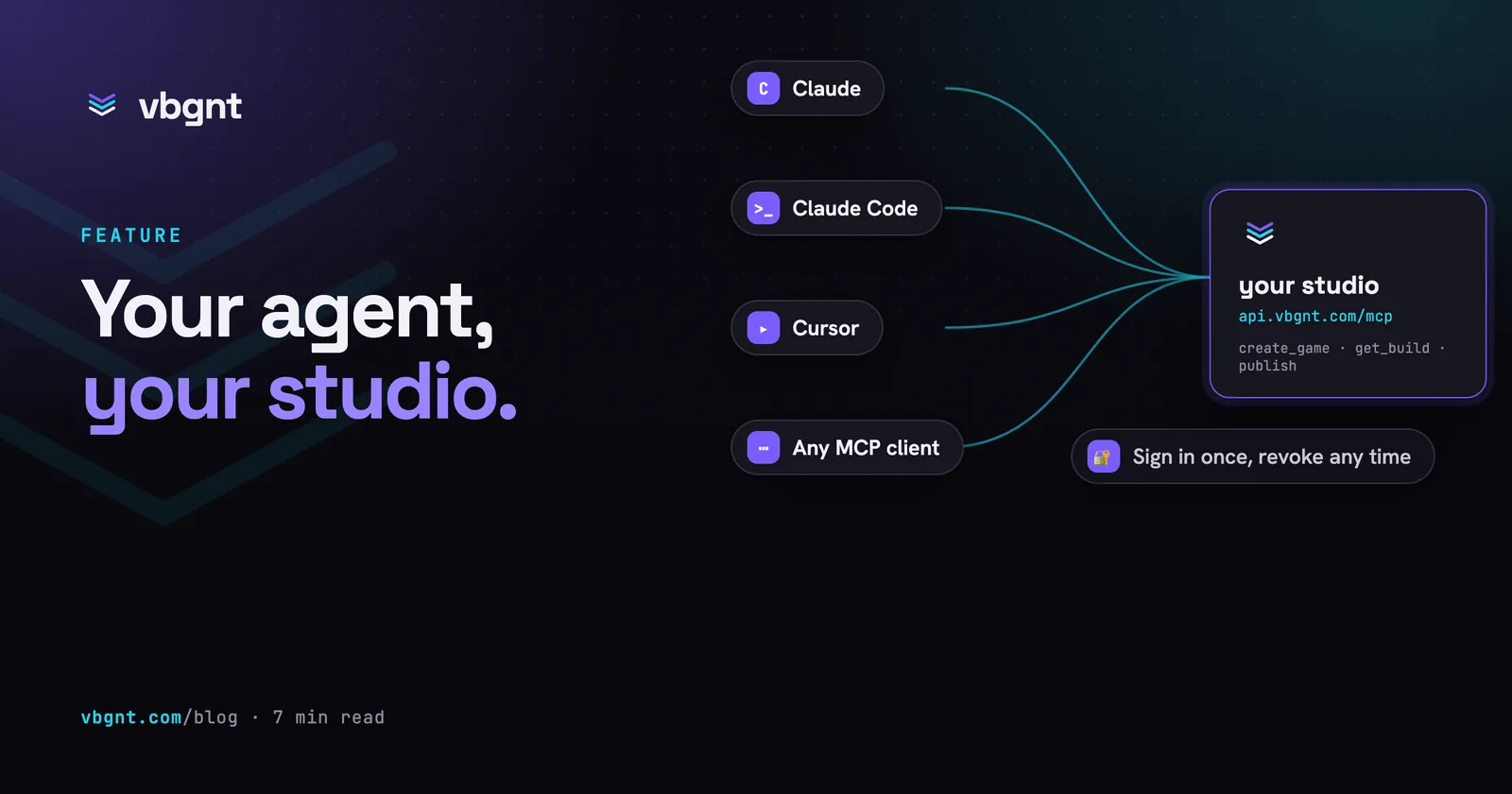
Connect Claude, Claude Code or any MCP client to your studio, sign in once, and your own agent can create games, follow the builds, manage your arcade and export the results from wherever you already talk to it.
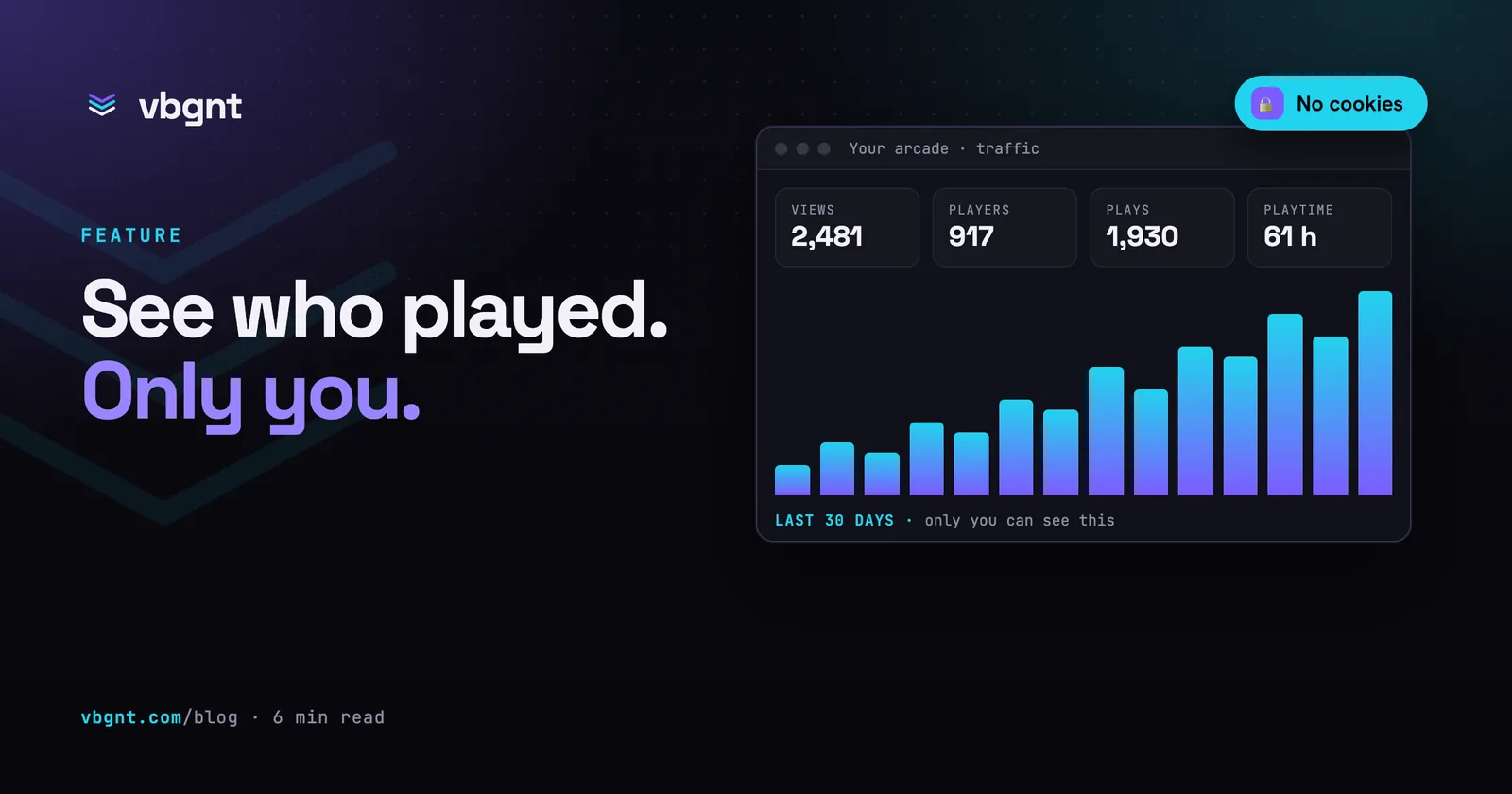
Views, players, plays and playtime for every game on your arcade, split by platform, visible only to you. No cookies, no addresses kept, and nothing shown in public.
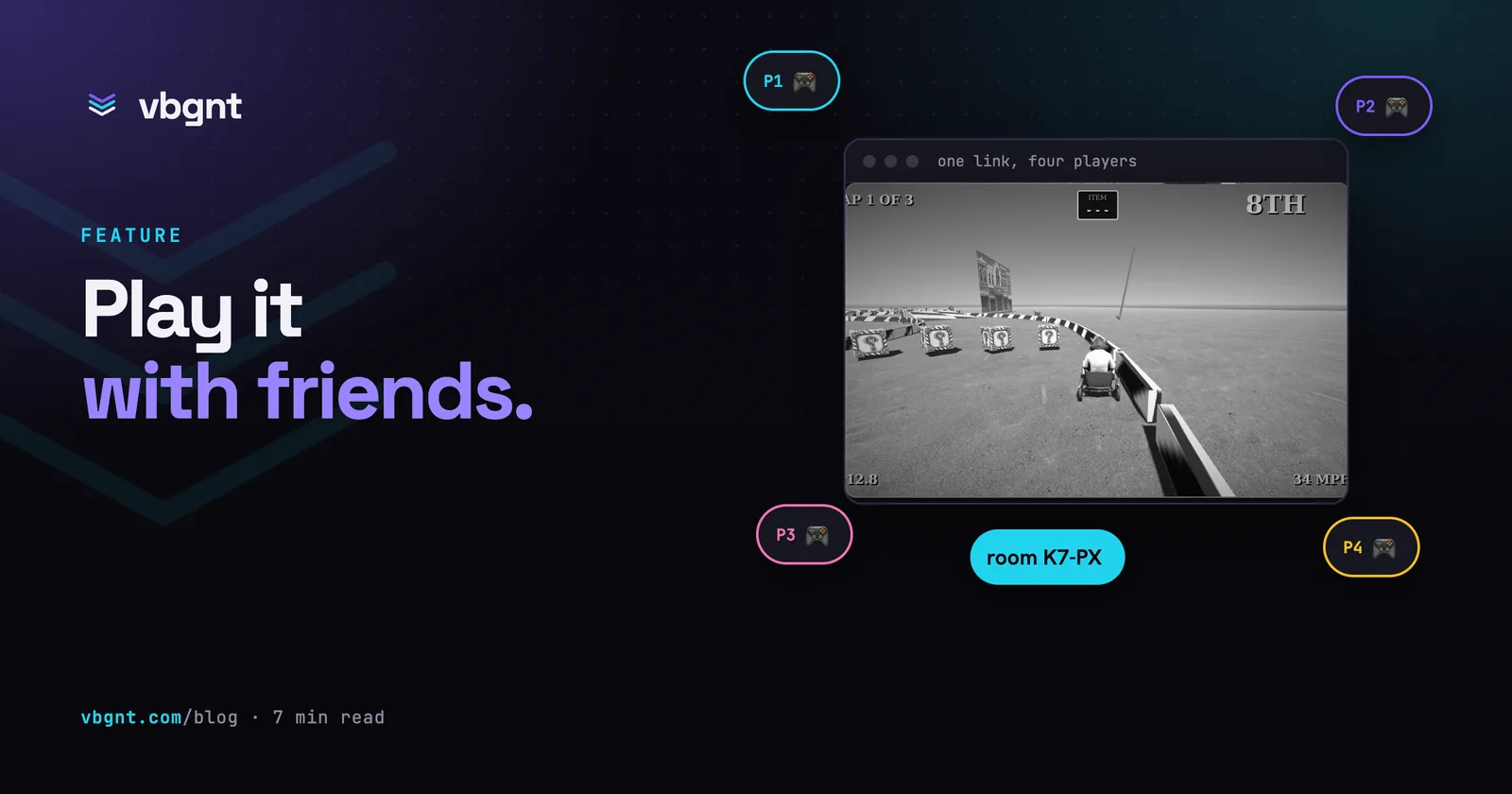
Ask for co-op or versus and the studio builds the lobby, the four-letter room codes and the invite links. One player hosts, the rest click a link, and the match runs browser to browser.
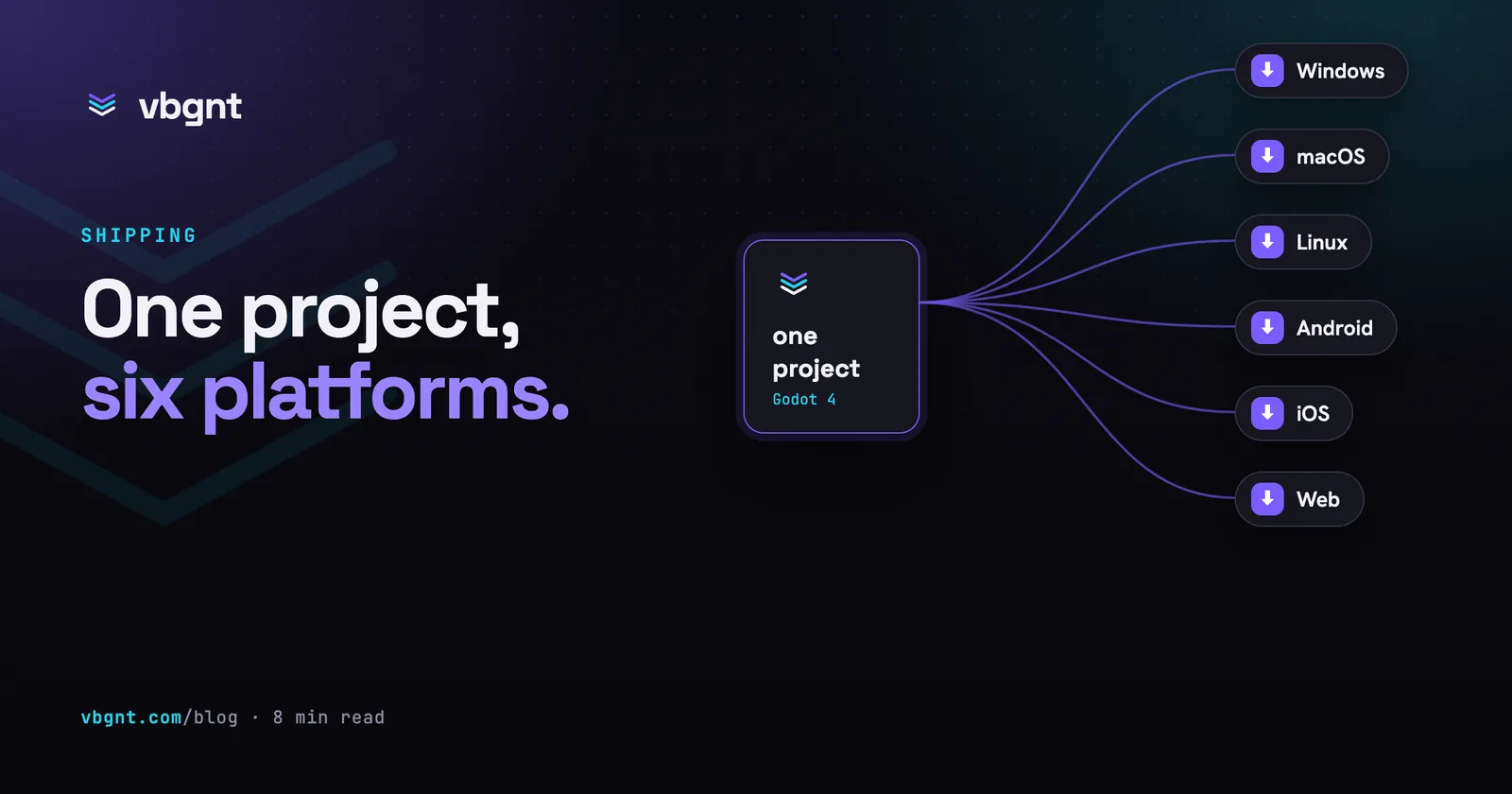
The arcade plays the web build. Everything else starts in the Publish pane: tick the platforms, press Export, and a build machine does the rest while you keep working on the game.
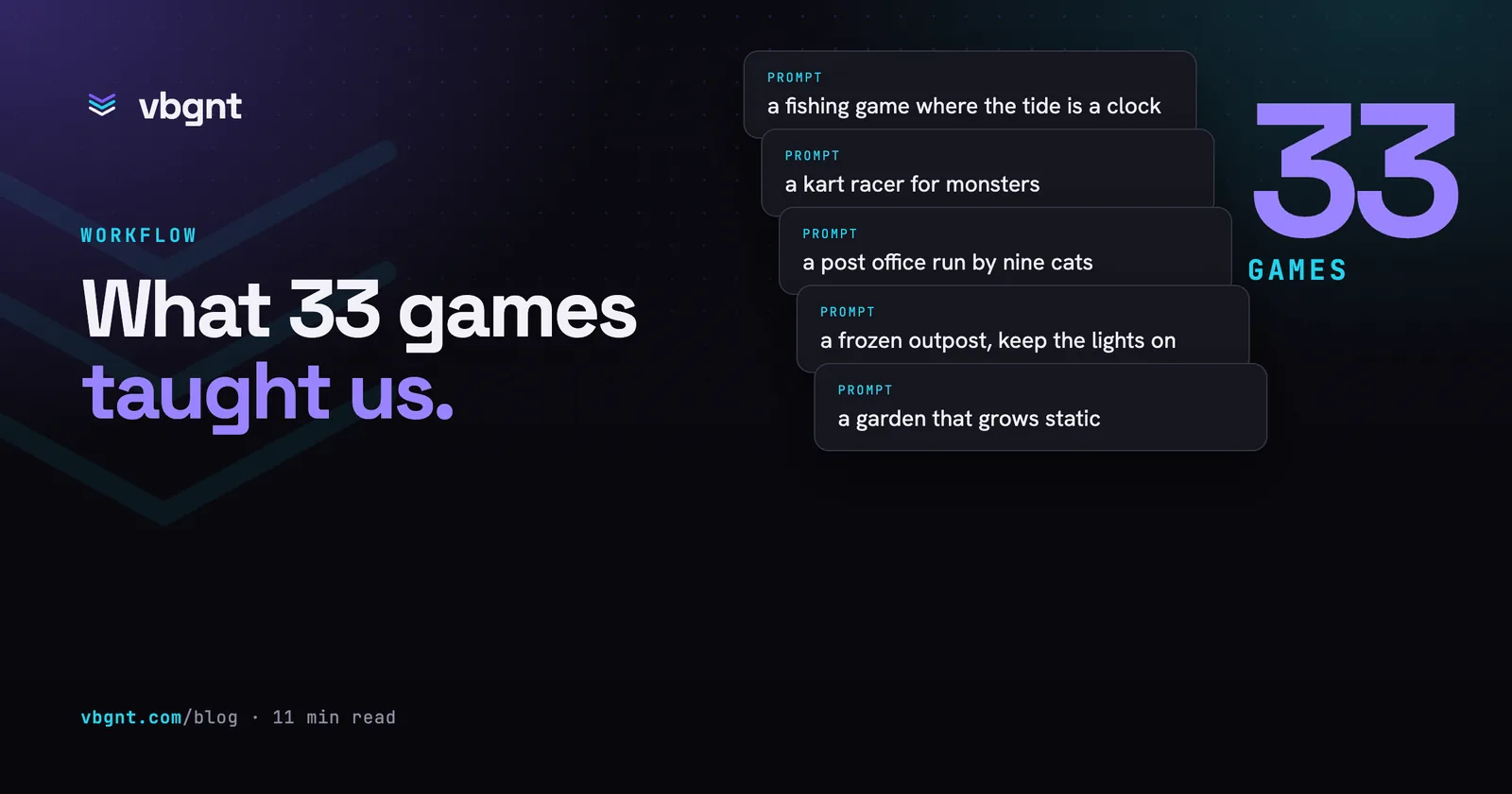
We read back every prompt that built the games in the gallery: 236 of them across 33 projects. Here is the order that worked, and what to say at each step.
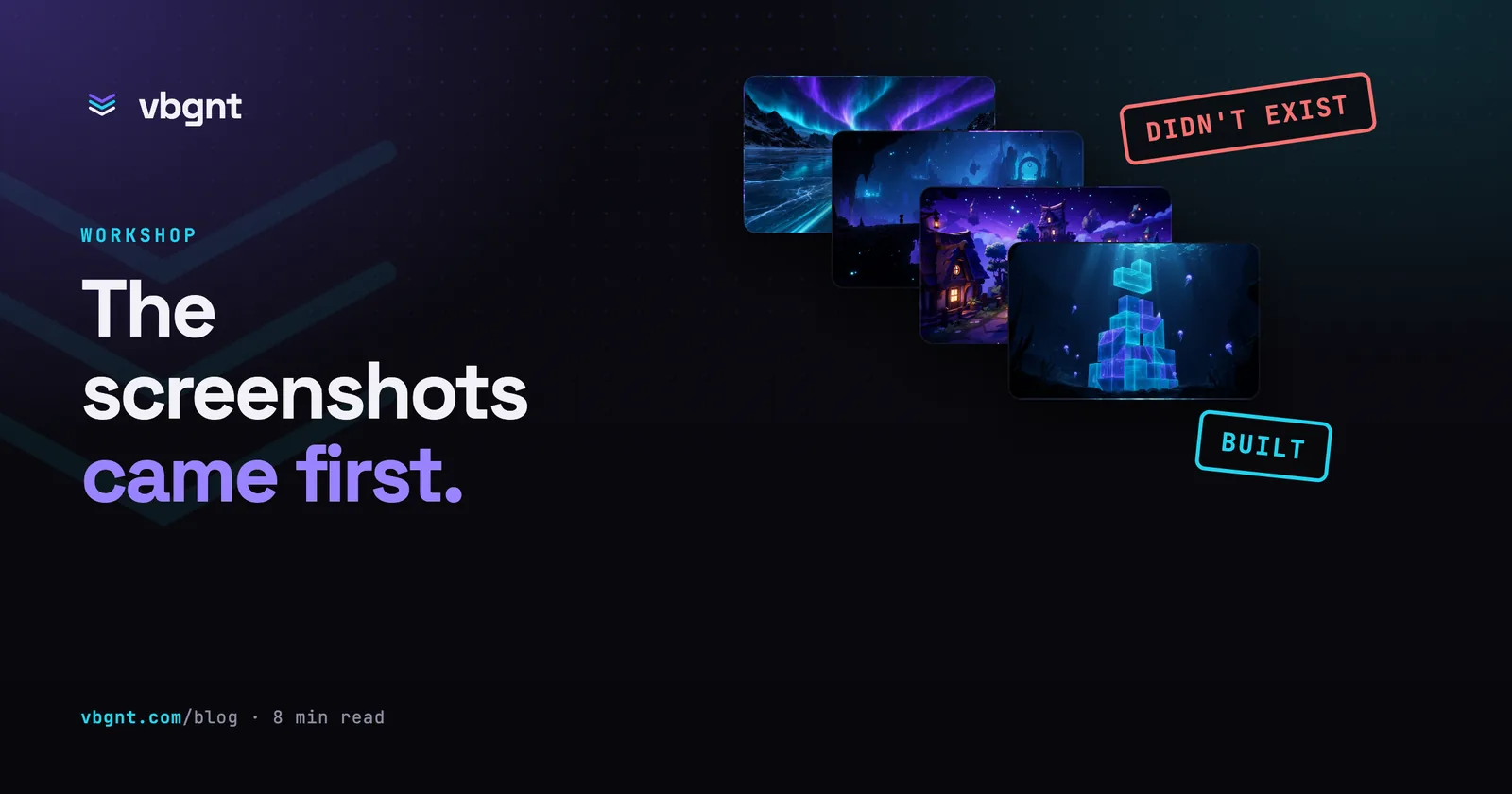
The five games on the homepage started as concept art with nothing behind it. We had briefs written from the images, ran them through the studio, and published the results at demo.vbgnt.com.
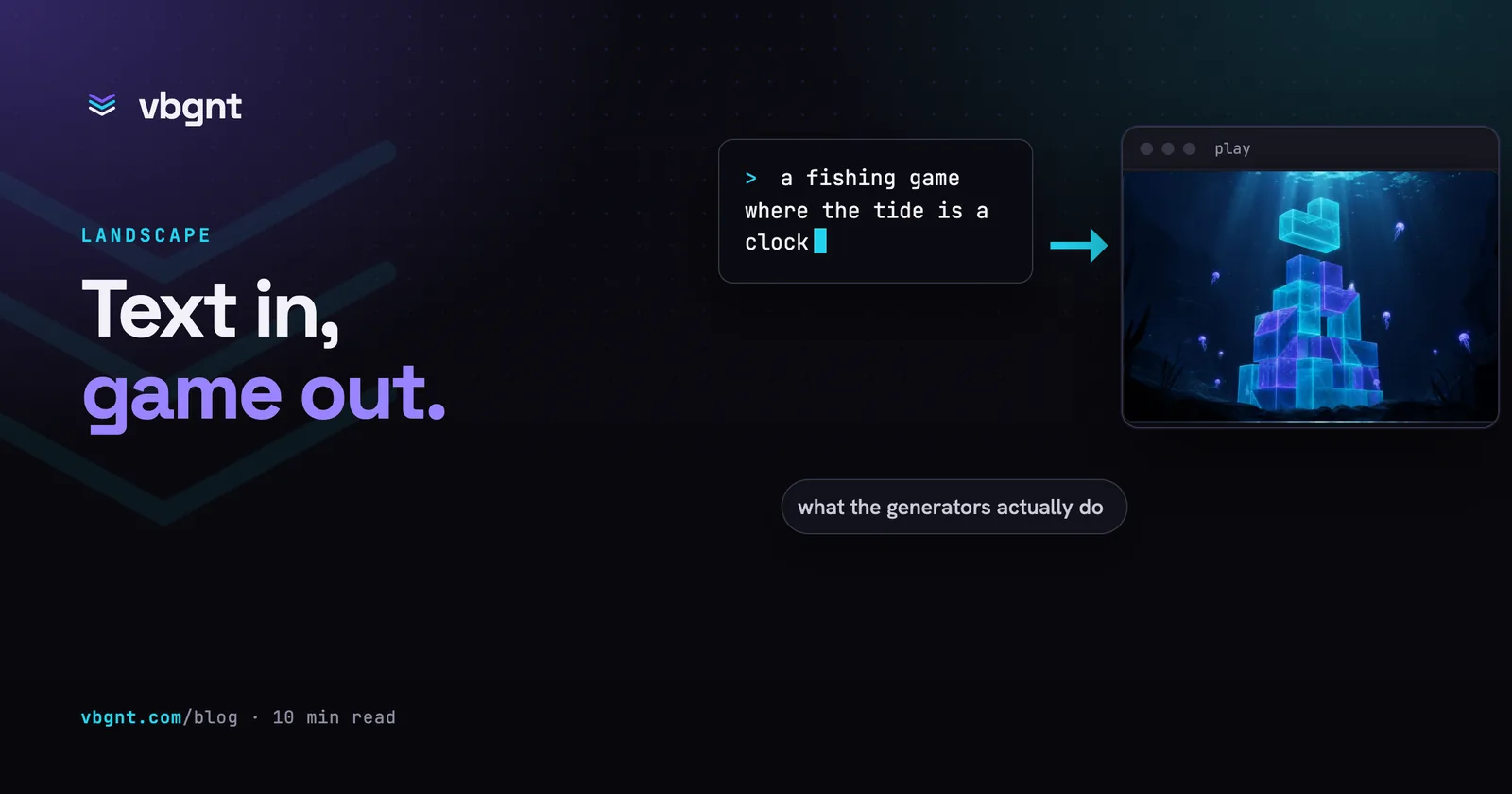
Four unrelated technologies are sold under one name, which is why the demos look impossible and the free tools feel like toys. Here is the actual taxonomy.
Three genuinely different routes now exist, and picking the wrong one for your project is the most common reason people give up in week two.
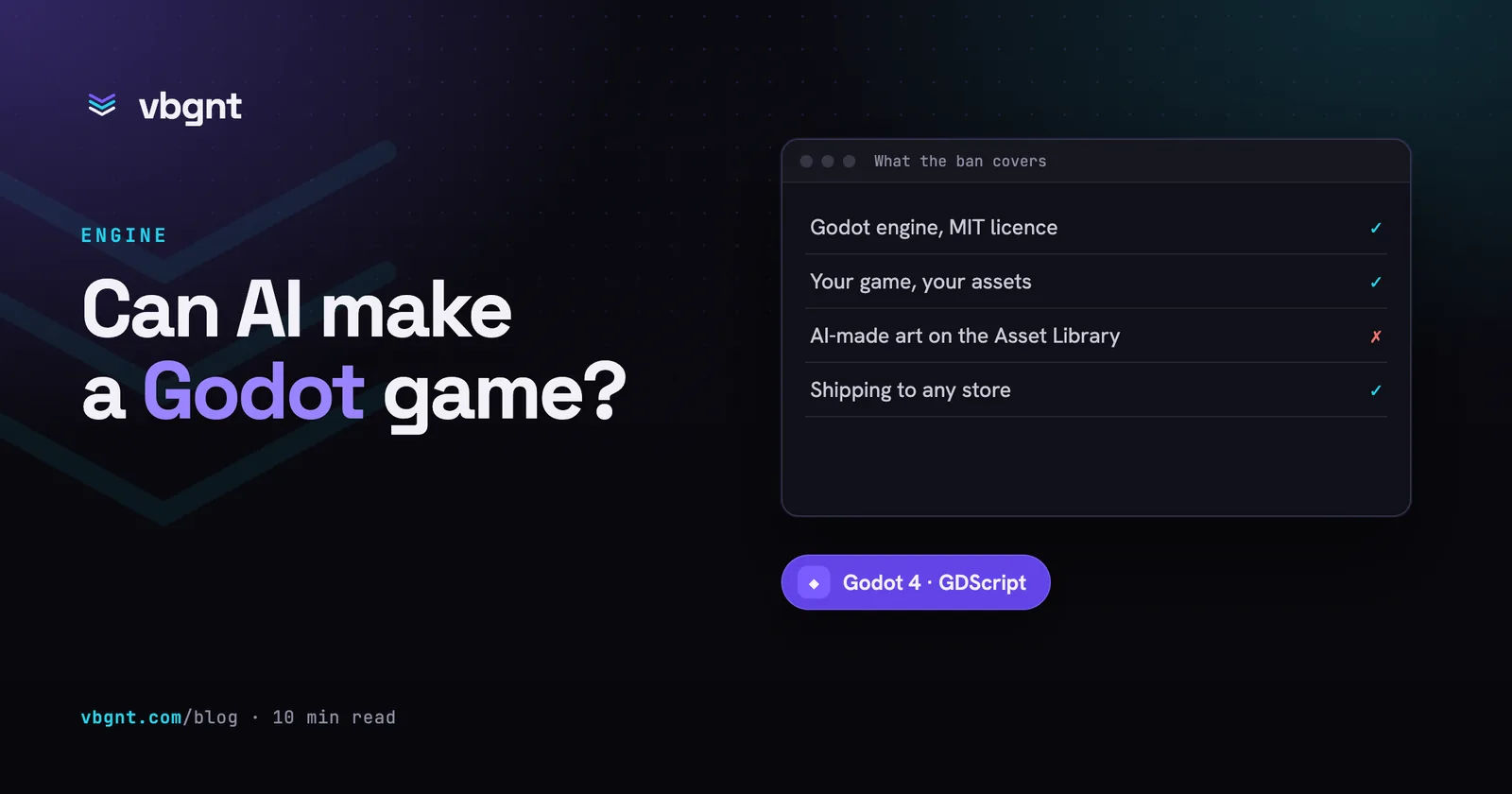
In June 2026 Godot banned AI-written code. It banned it from the engine's own repository, not from your project, and the distinction is the whole answer.
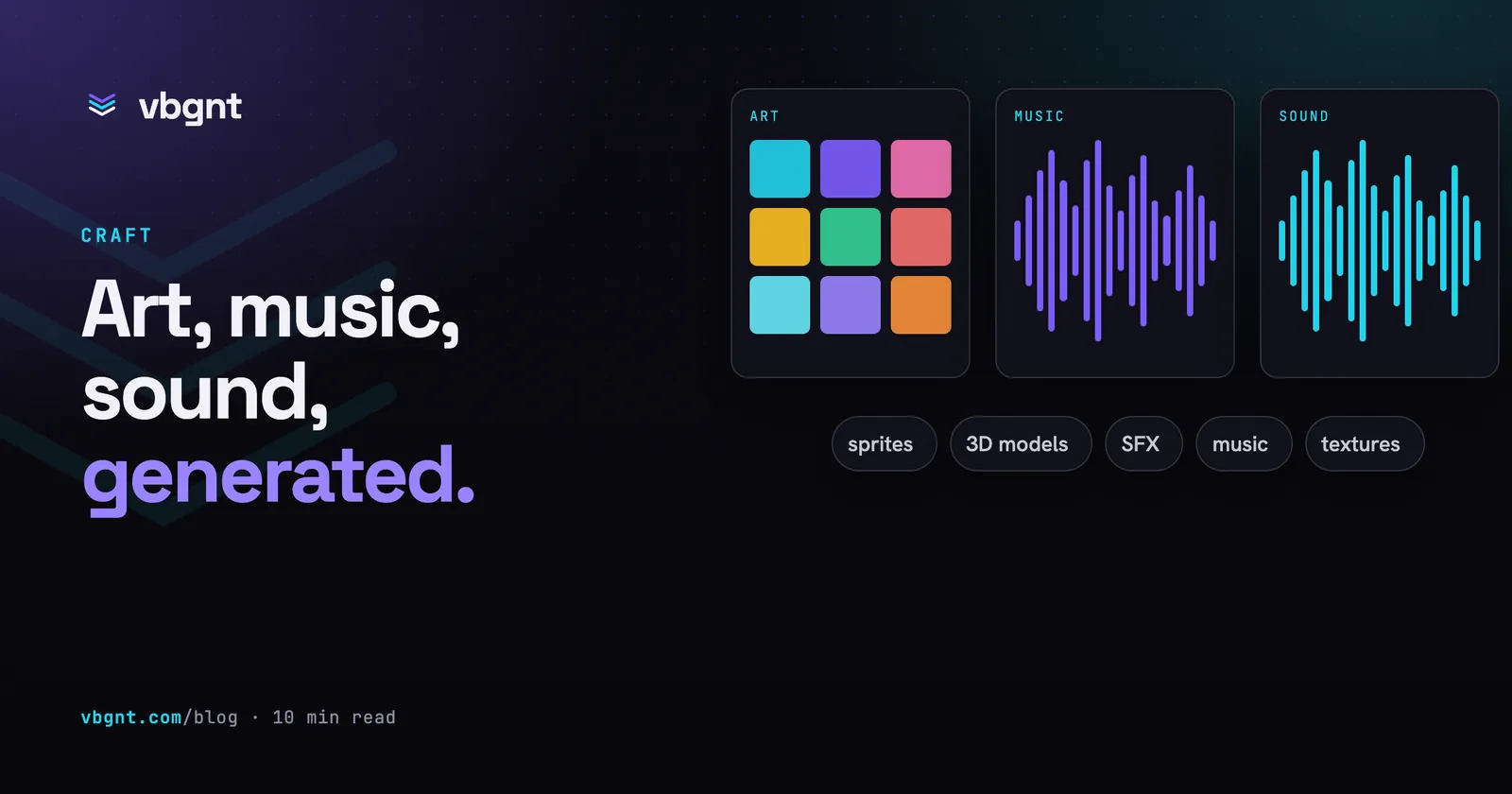
Generating a good asset is easy. Generating a coherent set of four hundred is hard, and a game is made entirely of sets.
Yes, with disclosure, and since January 2026 the rules no longer ask about the tools that wrote your code. What that means, and what it still covers.
Steam will not take the web build, so the job starts with a desktop export. Then a $100 fee, a 30-day wait, and a store page that matters more than the game does.
The export is routine. The review is not. Apple's guidelines are pointed at exactly the kind of small, quickly-made game a generative studio produces.
Twenty-five dollars, once, and no Mac required. Then the obstacle nobody sees coming: twelve real testers, for fourteen continuous days, before you can ship.
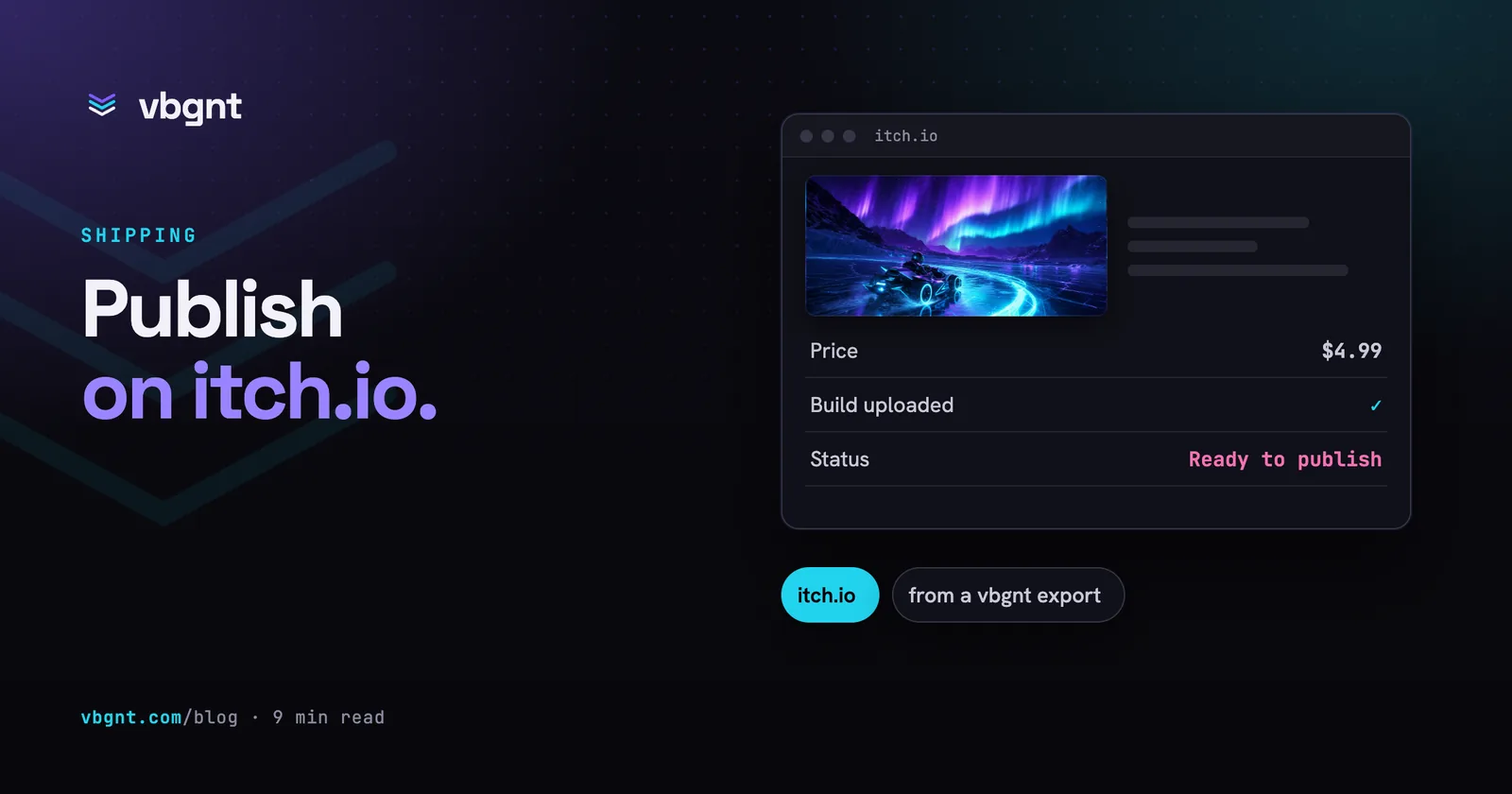
The only one of the four the studio can finish for you. No native build, no signing, no review, no fee. Create the page, tick a box, and the Publish pane pushes the build.
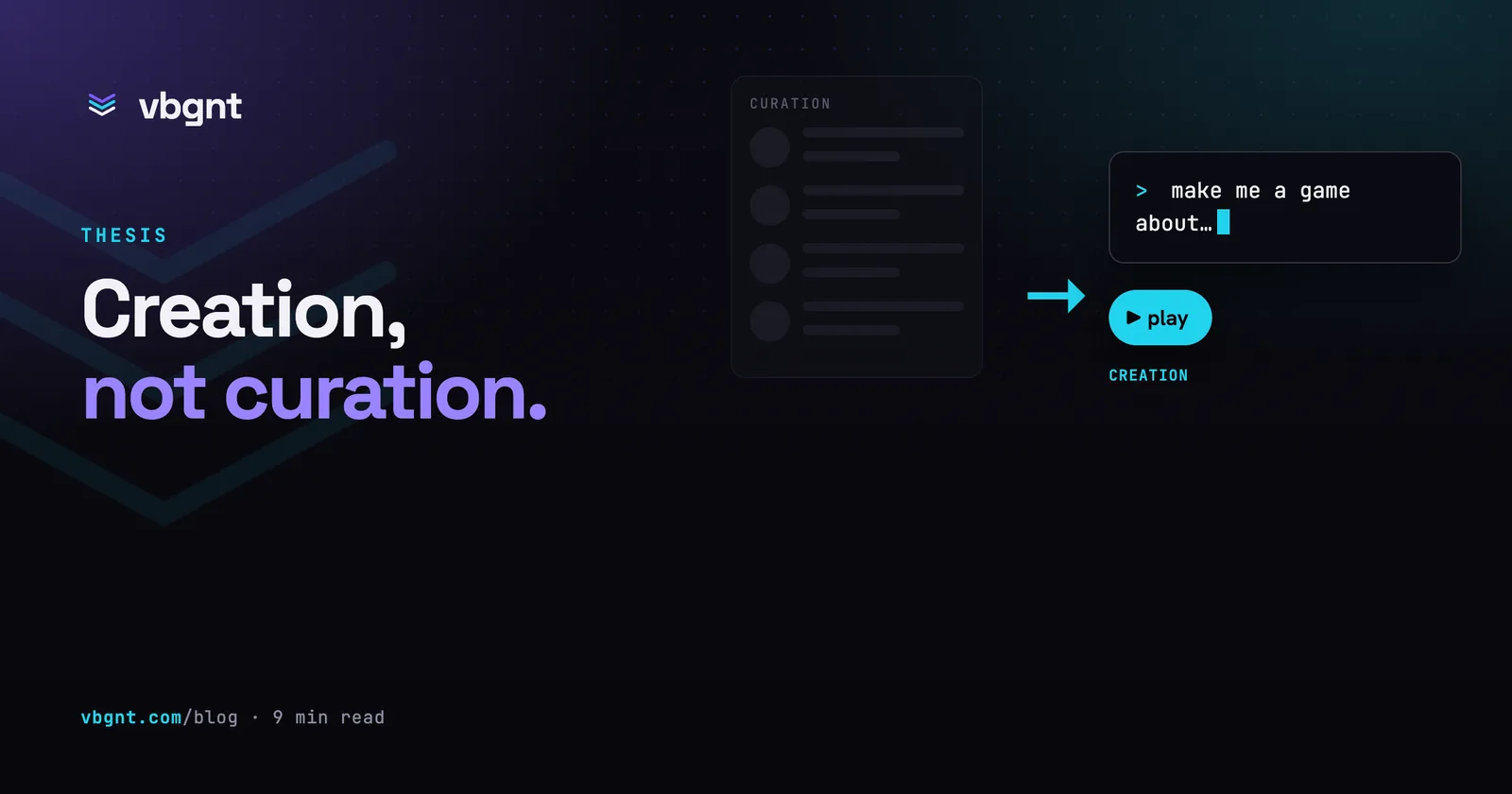
For twenty years the interesting problem was finding something to play. The interesting problem now is that making one has become faster than searching.
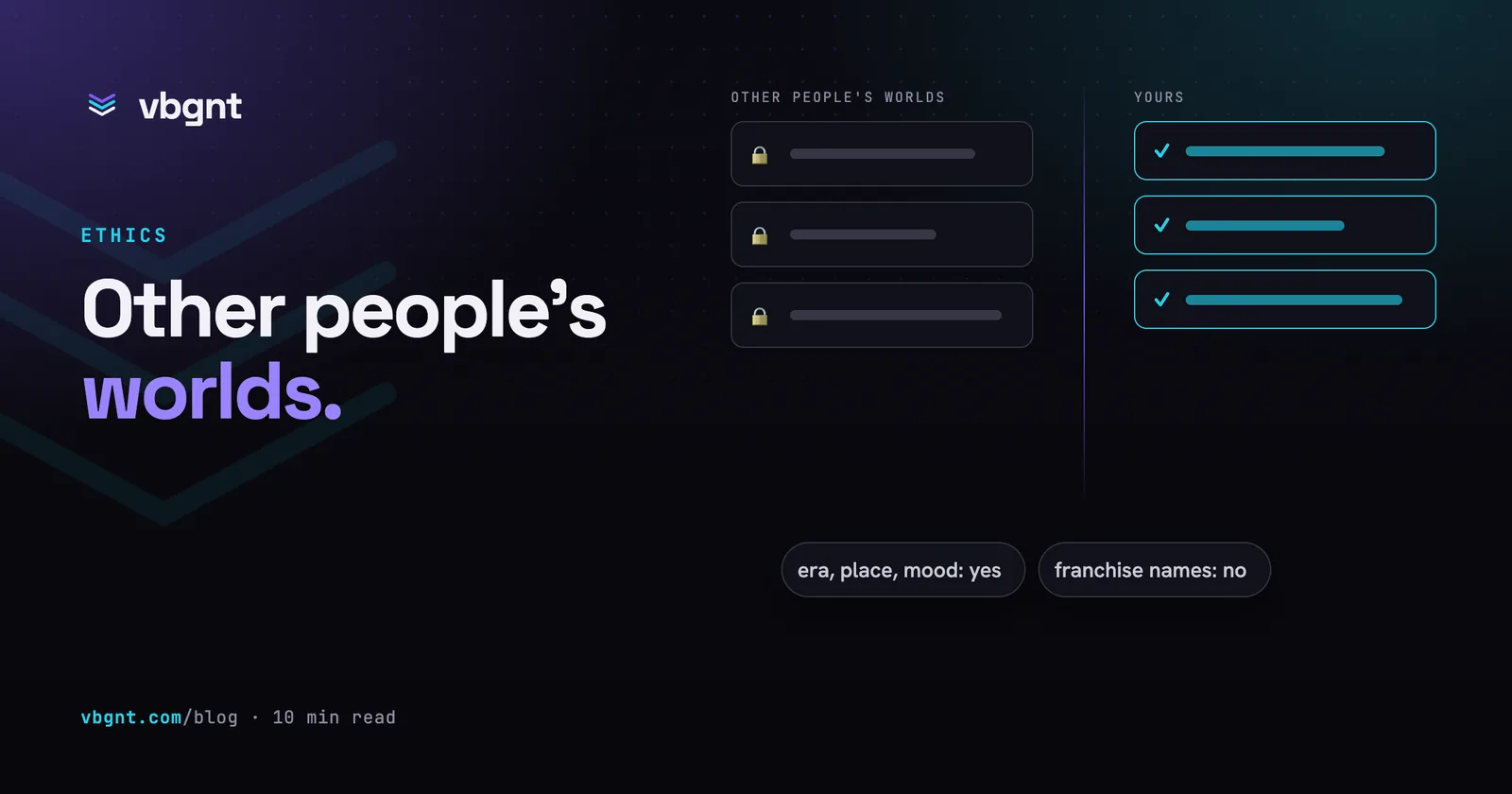
A machine good enough to build the game you're nostalgic for is good enough to build it too faithfully. That is a product decision long before it is a legal one.
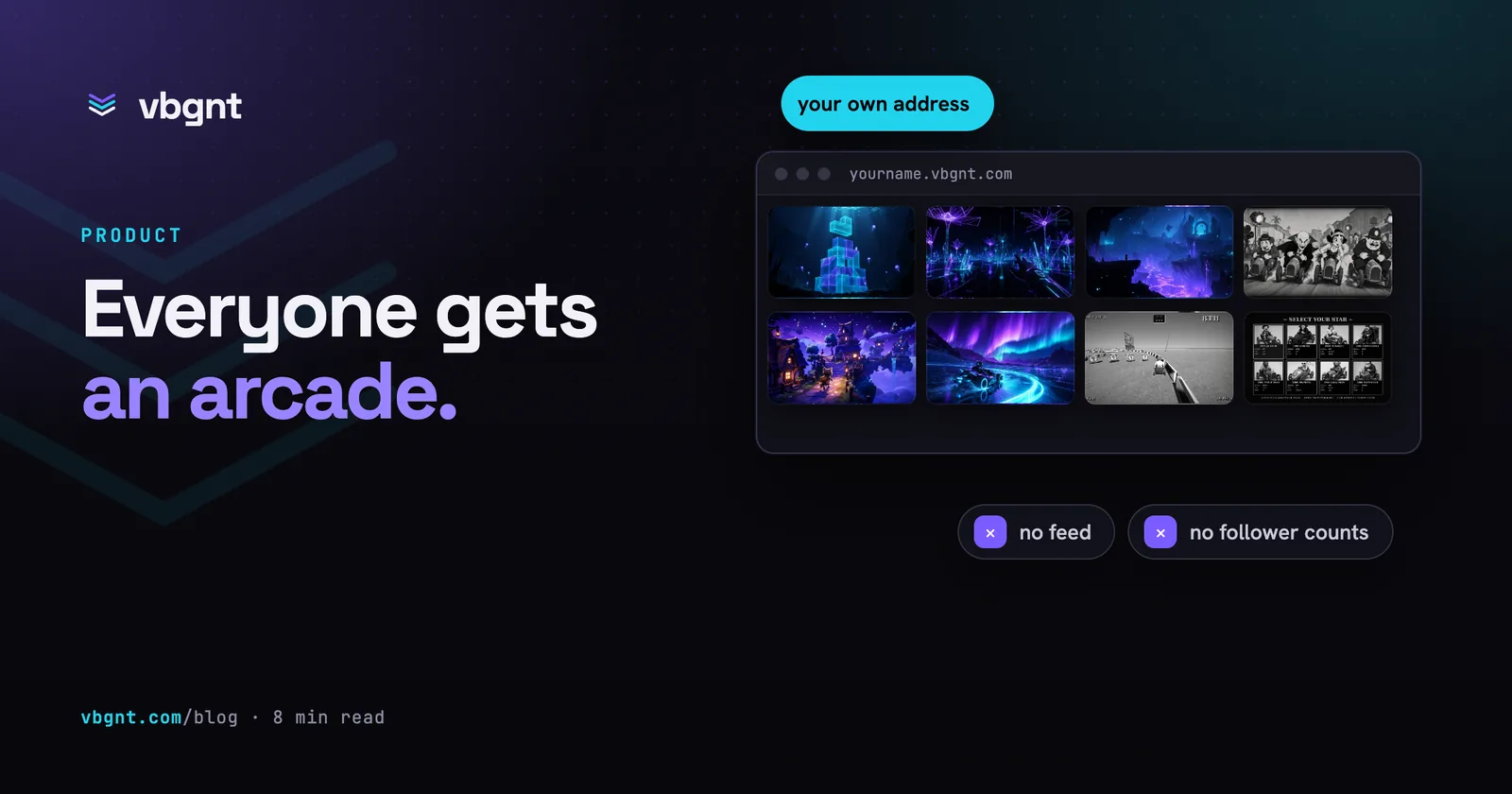
Your games land at your own address, laid out like a console dashboard. There is no algorithm in between, and that is a design decision, not a missing feature.
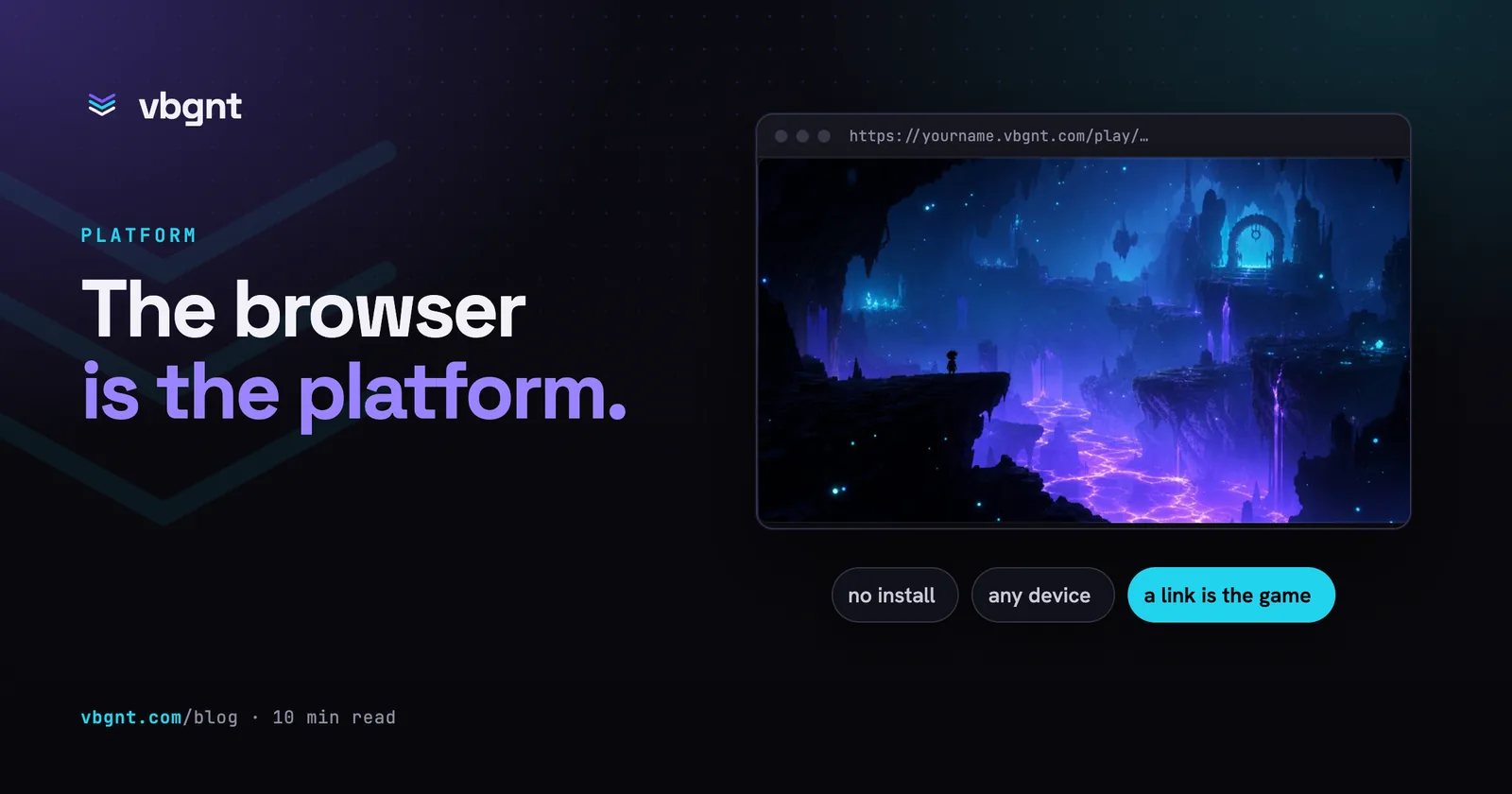
A game you have to install is a game nobody plays. The web build is the only target where "here, try this" is a link and not a favour.
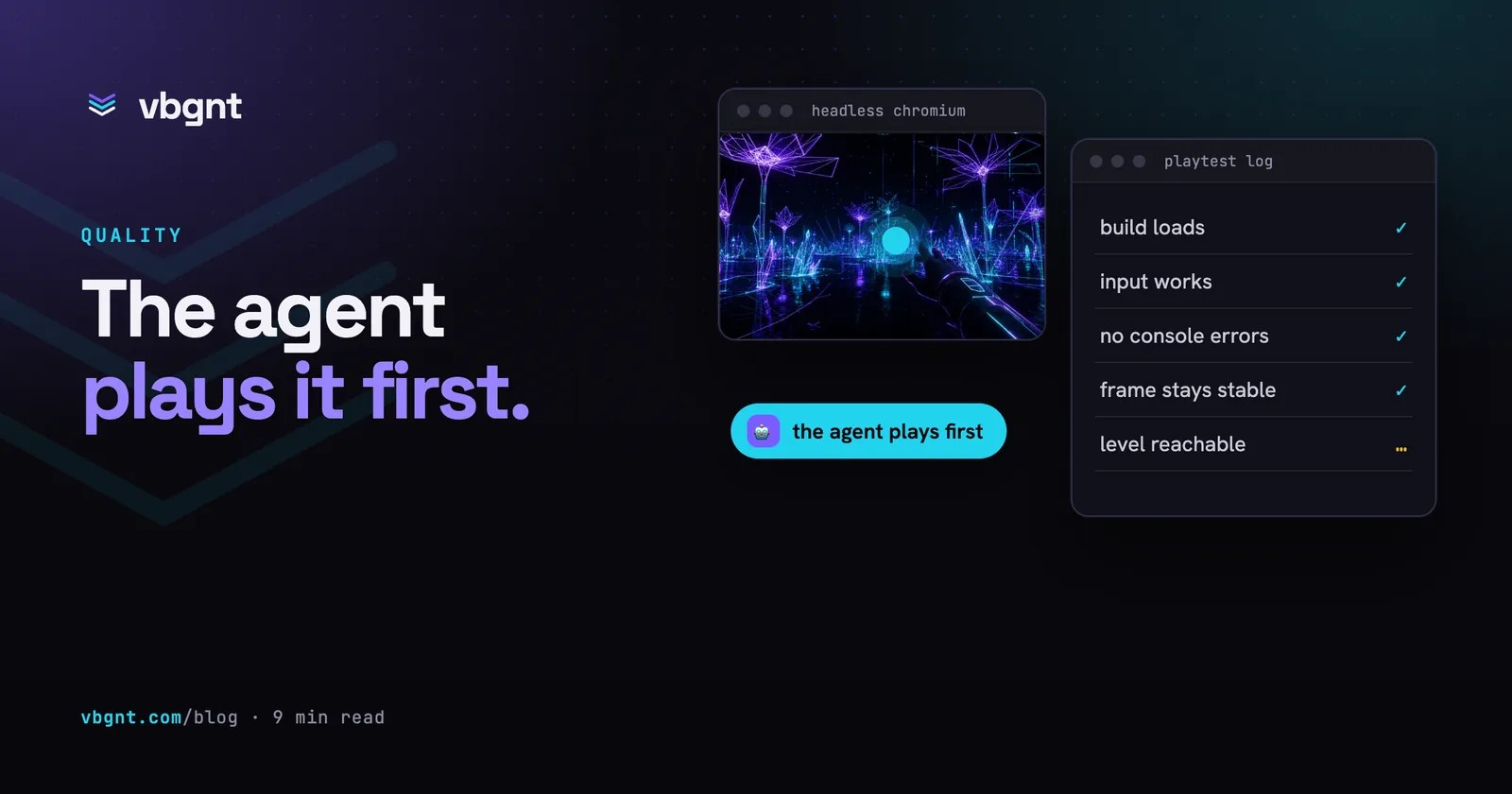
A generated game that doesn't boot is worse than no game at all, because it costs you the ninety seconds it took to find out. So the build gets played automatically.
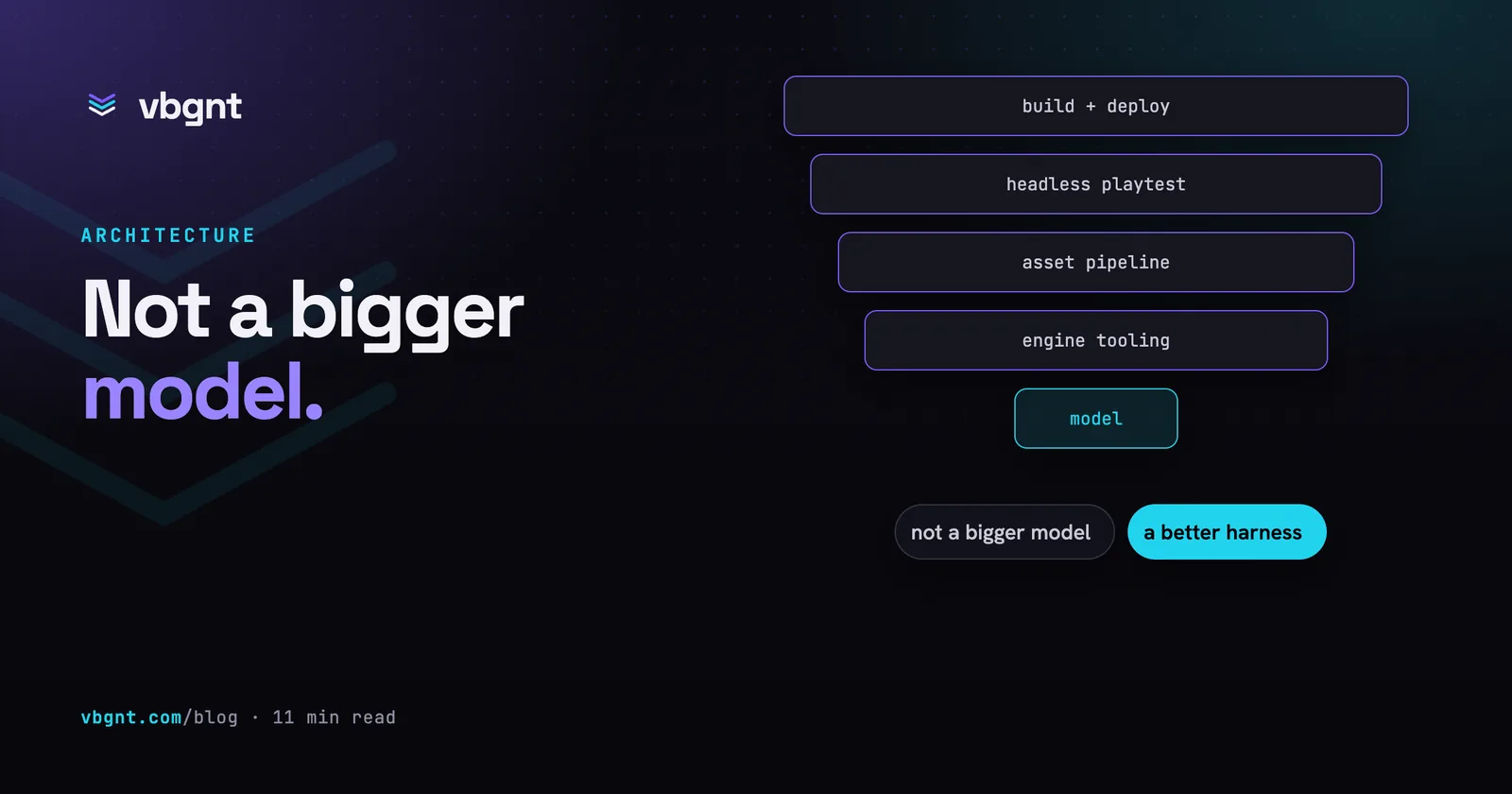
Every model can write a game loop. Almost none of them can hand you something that runs. The gap between those two facts is the entire product.
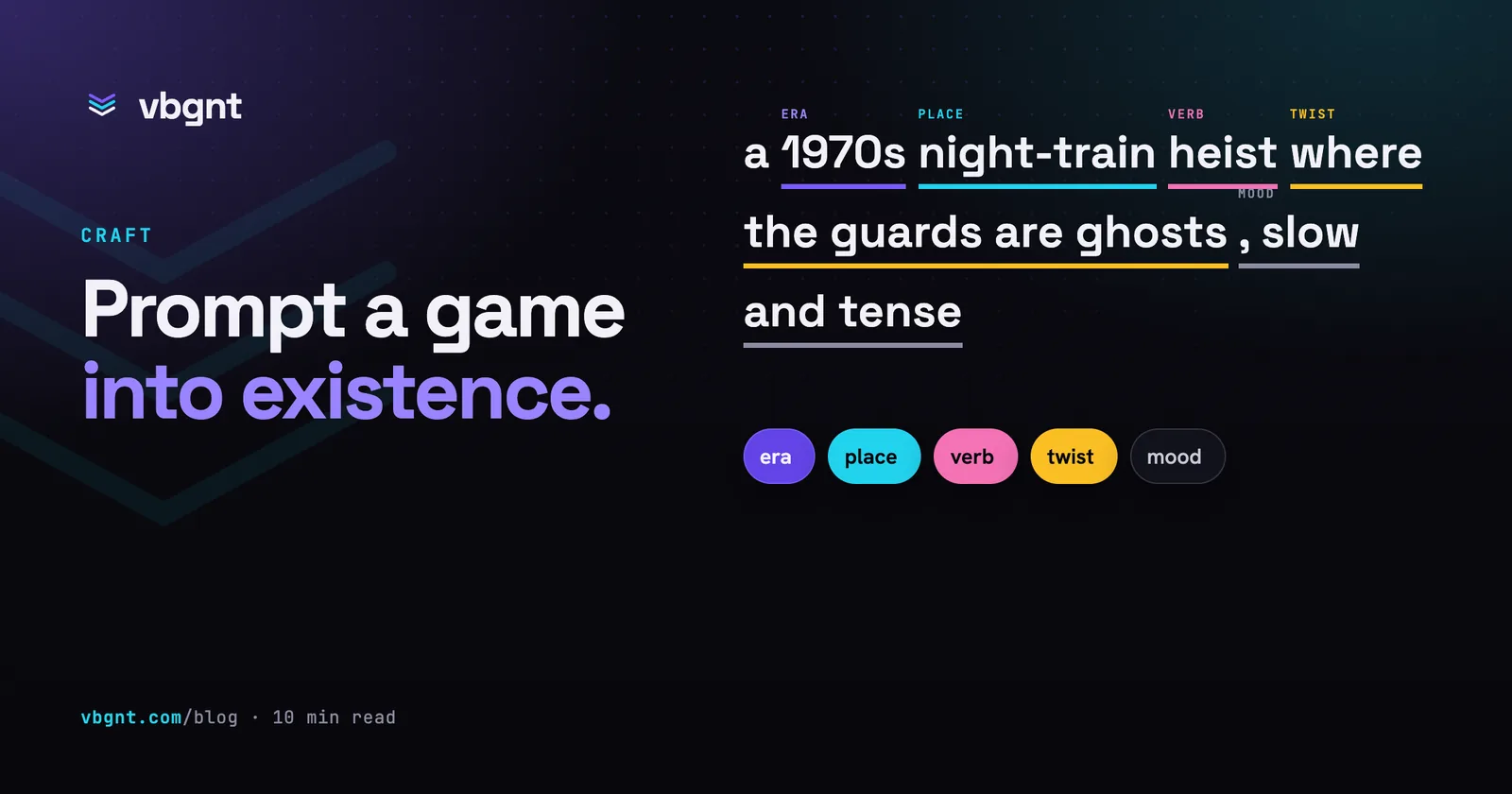
The difference between a generated game worth playing and a generated shell is almost entirely in the first two sentences. Here is what belongs in them.
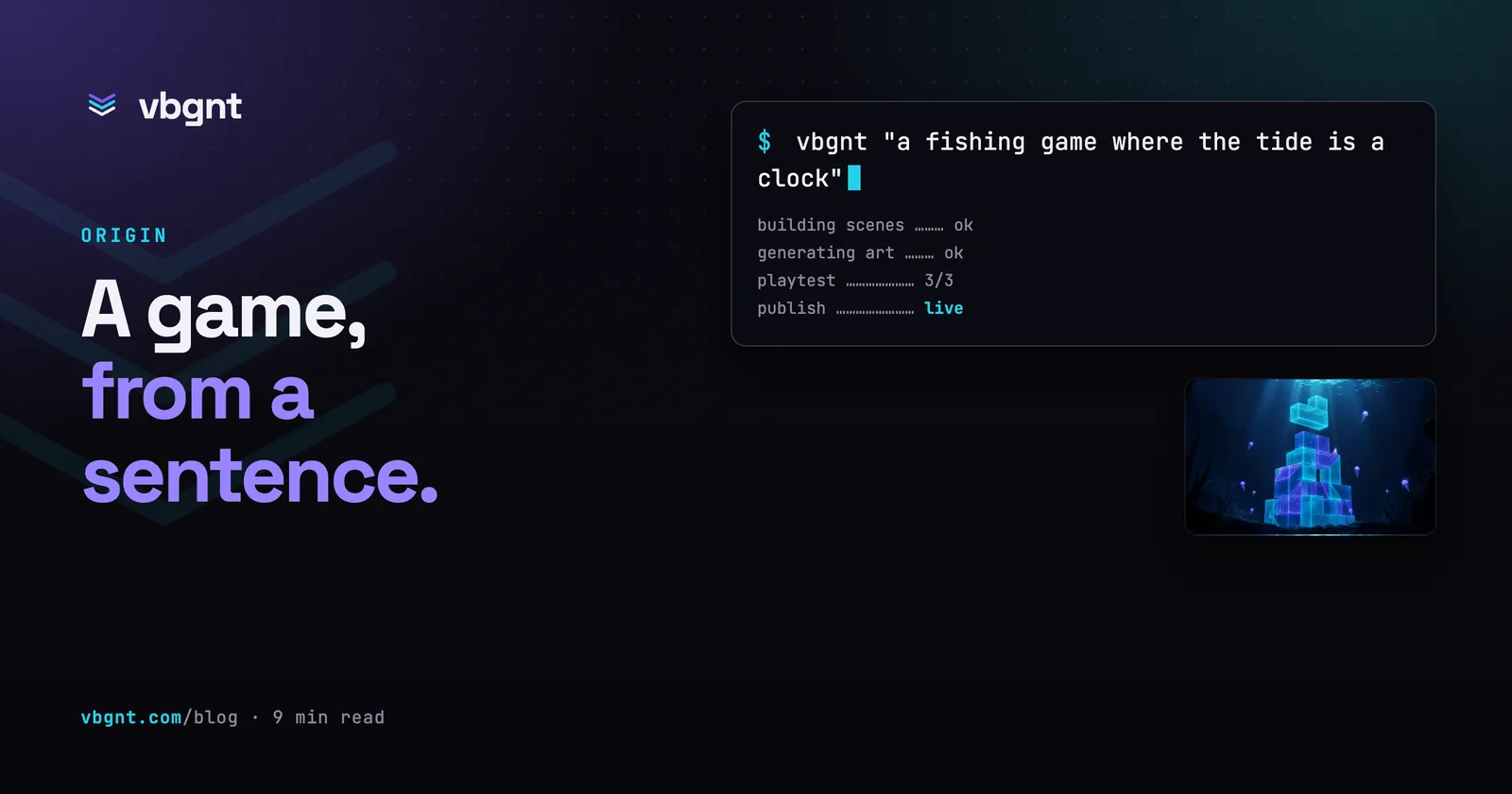
The console I actually wanted didn't exist: one where the library is written on demand, in the fifteen minutes between having an idea and wanting to play it.
Everything here is how the studio works. The shorter version is: say what you want to play, and a few minutes later play it.