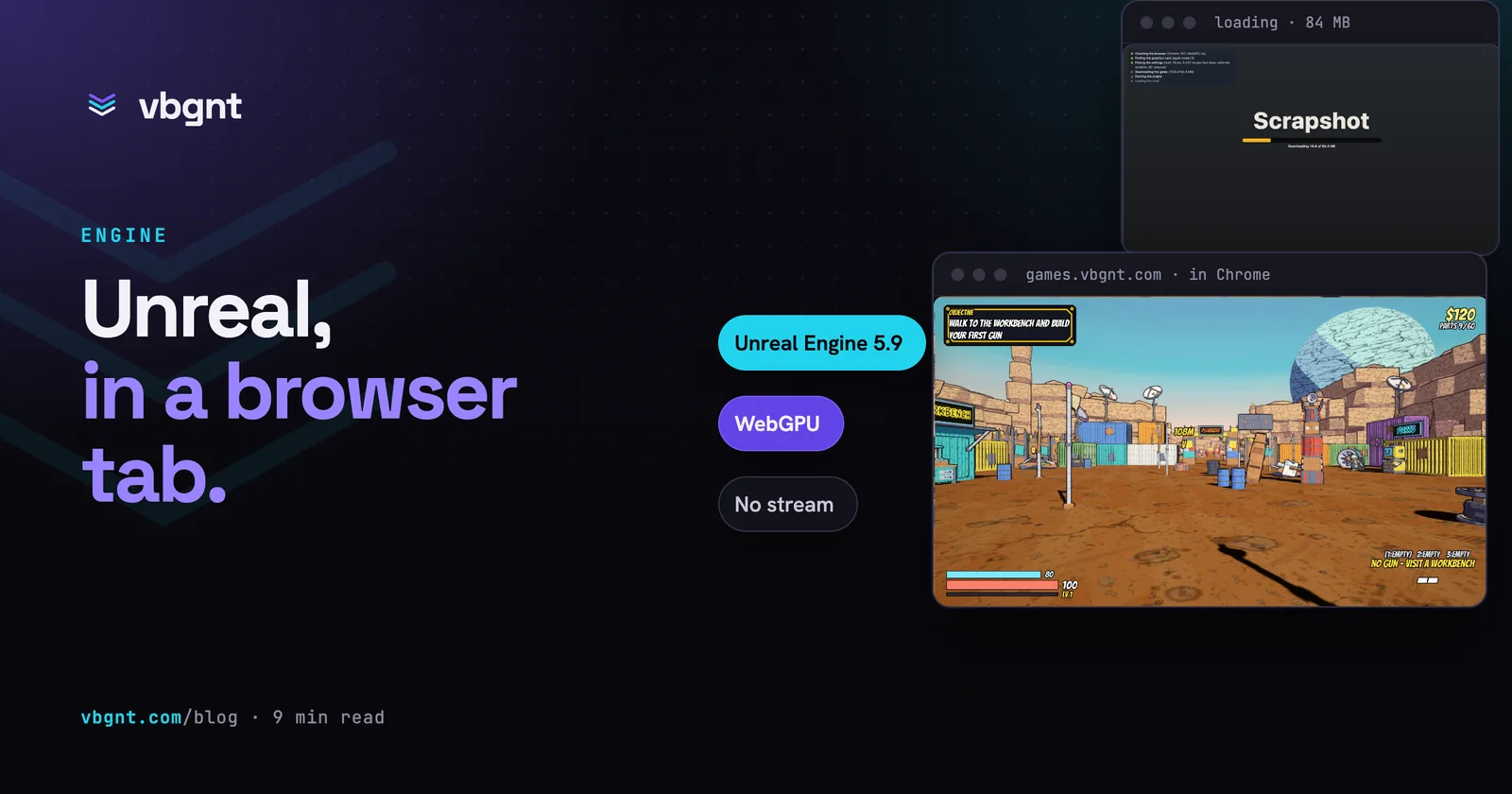
Unreal Engine games made in the studio can now play in a browser tab. Pick Unreal 5.9 for a new game, and after every turn that compiles the studio packages a web build: the game compiled to WebAssembly, drawn with WebGPU, hosted on games.vbgnt.com and listed in your arcade like any other game. No download, no stream, no install.
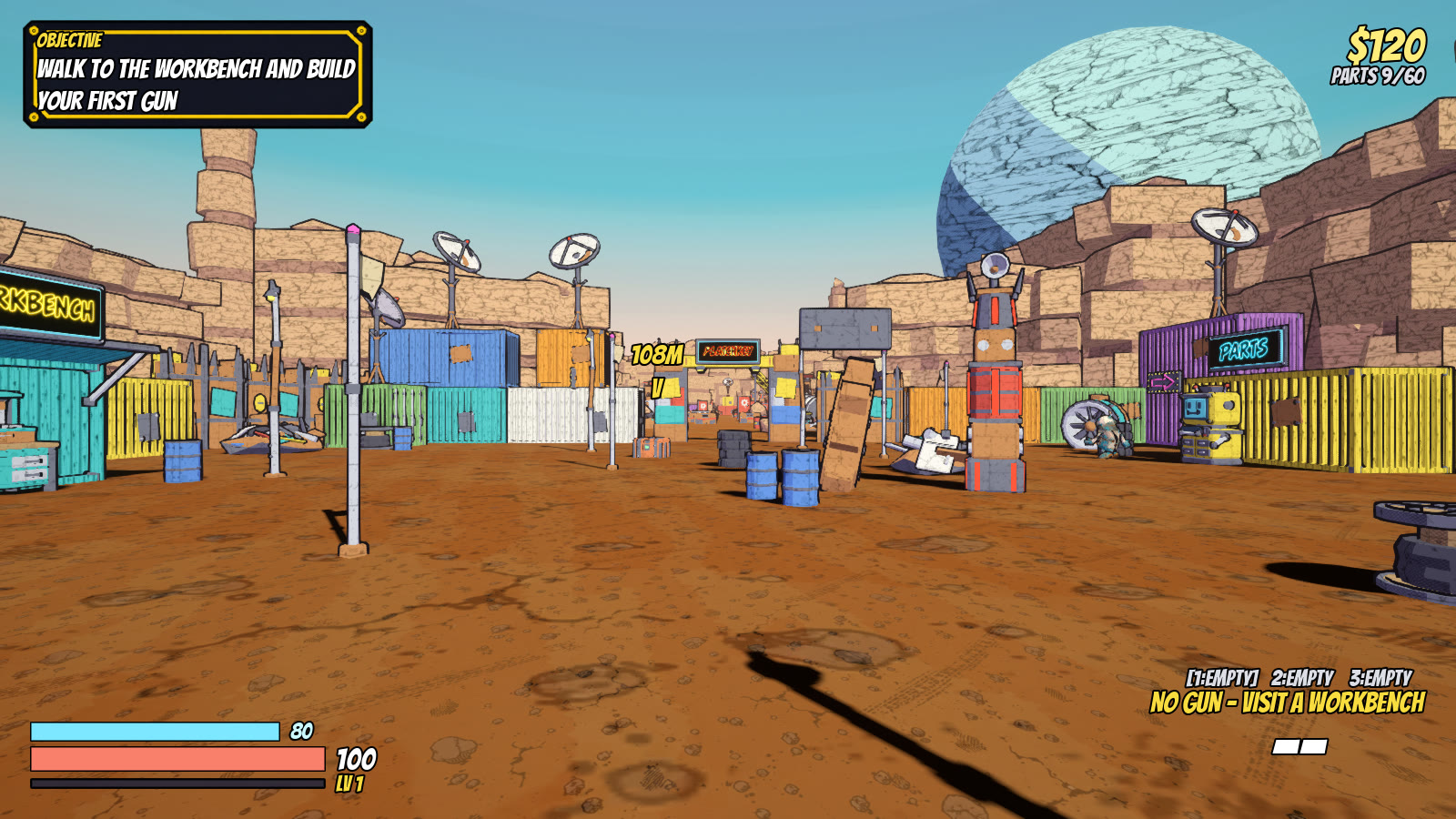
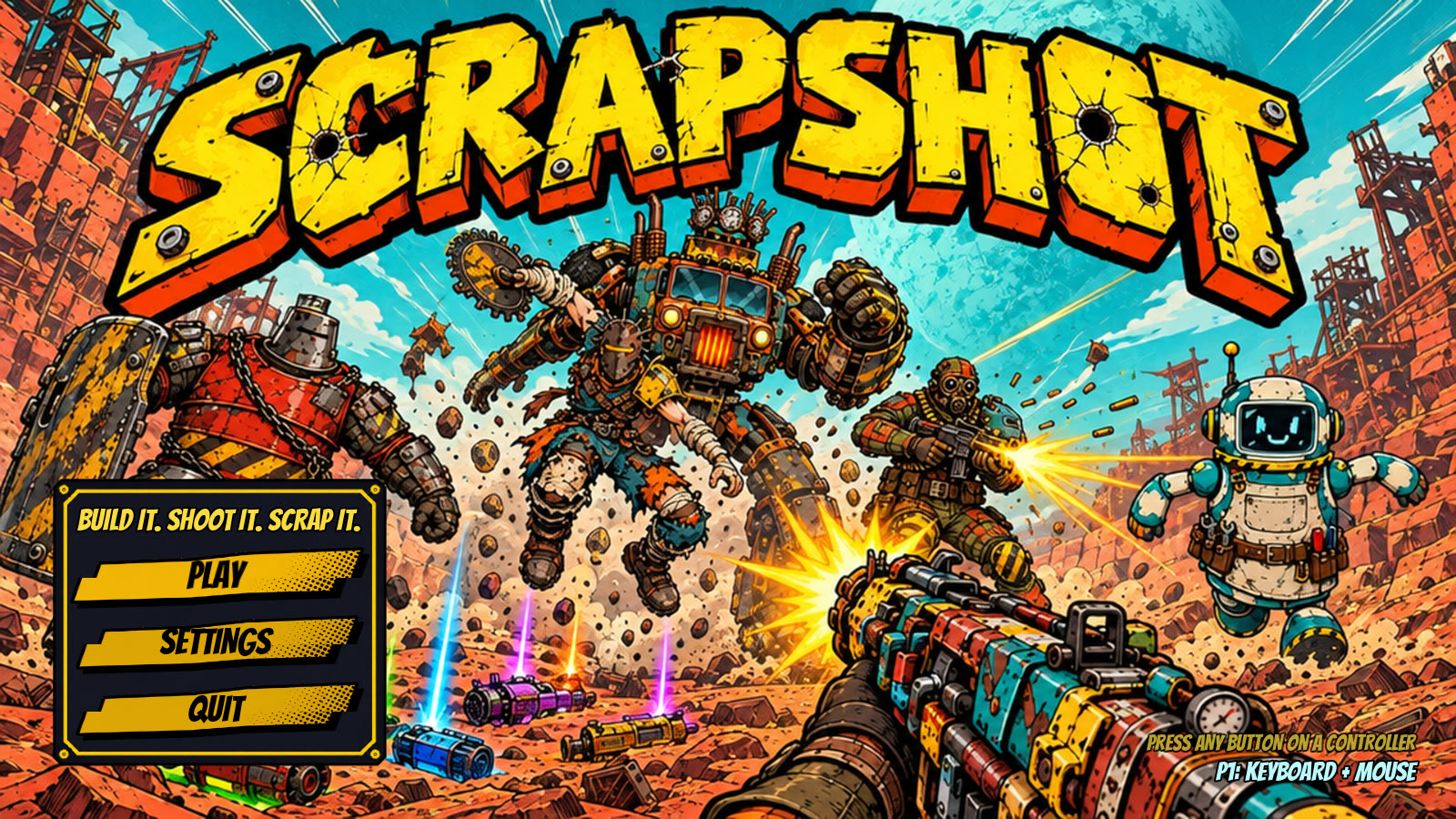
Our example is Scrapshot, the first game we made on 5.9: a comic-book looter shooter where you never find a finished gun, only parts. It took five turns. This post walks through them, shows what the web build looks like in Chrome, and is plain about what 5.9 on the web can't do yet.
What does Unreal 5.9 add?
Epic released a preview of Unreal Engine 5.9 on 9 November. The headline for us is an experimental web target: the game is compiled to 64-bit WebAssembly with threads and drawn with WebGPU through Unreal's mobile renderer. Epic's forum post says it needs a source build of the engine. The Launcher install on our Windows workstations turned out to have the web platform and Epic's own manual for it already in place, so all it needed was the exact Emscripten version the engine asks for.
Until now an Unreal game made in vbgnt reached a browser one way: the studio packaged a Windows build and streamed it from a cloud GPU. That works on anything, but somebody pays for the GPU while you play. A web build runs on your own graphics card, from ordinary files on our games host, the same way our Godot and GANDER games always have.
5.9 sits beside 5.8 as a second engine on the same workstations. You pick it per game on the new-game form, and a game stays on its version: a project saved in 5.9 doesn't open in 5.8. Unreal 5.8 is still the default, because Epic calls the preview unstable until the final 5.9 release. Either way, Unreal is part of Professional, and the studio is invite-only while we build it.
How does a web build get made?
You don't ask for it. On a 5.9 game, the build the studio makes in the background after every turn that compiles is the web build, in the Shipping configuration. When it's ready the studio copies it to the game's address on games.vbgnt.com, and the game shows up in your arcade and in the games directory like a Godot game would. The game's page plays it in place, with the cloud stream as a fallback for browsers that can't.
The Windows build, and the stream it feeds, are now made only when you ask for them. Older 5.8 games are unchanged: no web target, and the Windows build after every turn as before.
A few things happen on the way that you won't see. Unreal's web build needs a page that is cross-origin isolated, so the browser allows the shared memory its threads use; our games host already sends those headers for every hosted game. Our game player only runs scripts from its own files, so the studio moves the inline scripts in Unreal's page into files of their own. And files are served so the browser always checks for a newer copy, because Unreal's own service worker caches the game by file and knows when one has changed.
What did Scrapshot take?
Five turns. The first was a long brief: a first-person looter shooter on a junk moon, where enemies and crates drop gun parts and you build your weapons at a workbench. A gun needs a receiver, barrel, grip, stock, magazine and sight before it fires, and an optional core adds a power. Rarities, manufacturers with personalities, rolled stats and stacking powers like shock, cryo and lifesteal. The brief also asked for the look to be done a particular way, and that matters for the web.
Turn 1: a playable game, built for the web renderer
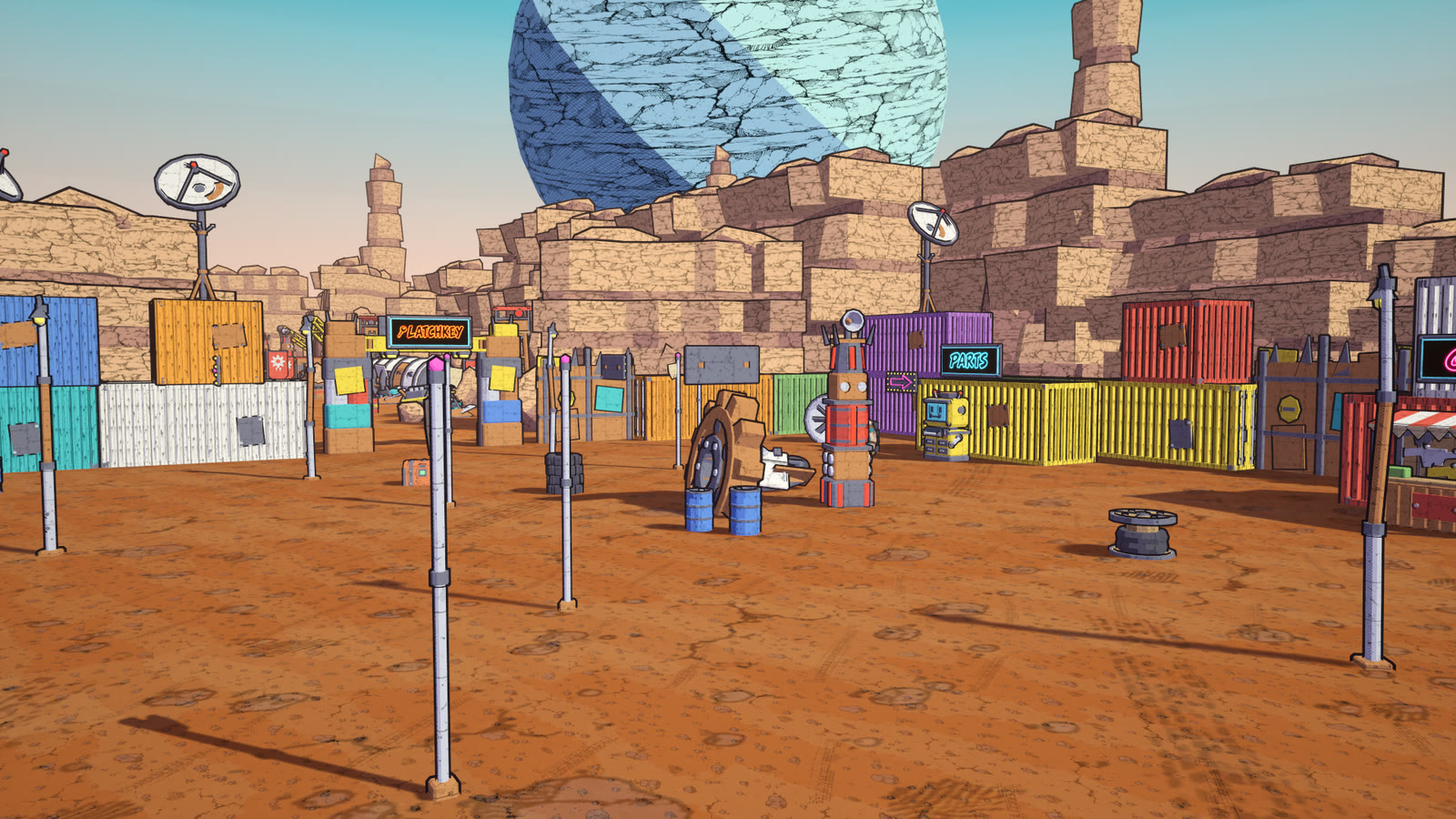
The brief asked for comic-book cel shading with bold ink outlines, built so it would survive the mobile renderer, because the game was meant for the web. So the agent put the stepped lighting, hatching and inverted-hull outlines in the materials, with no Lumen, no Nanite and no post-process chain. It checked its screenshots on the forced mobile renderer against desktop and they matched.
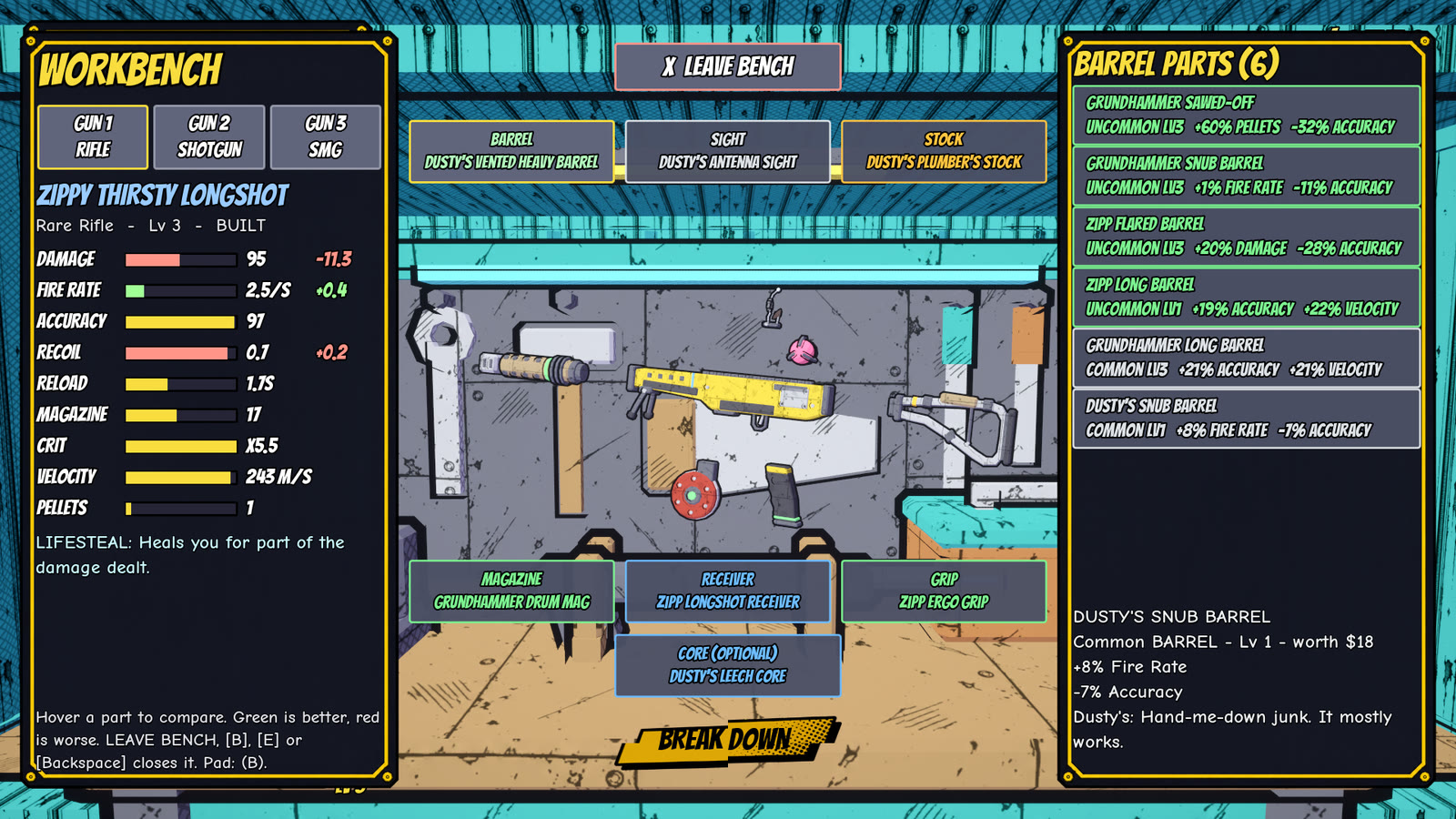
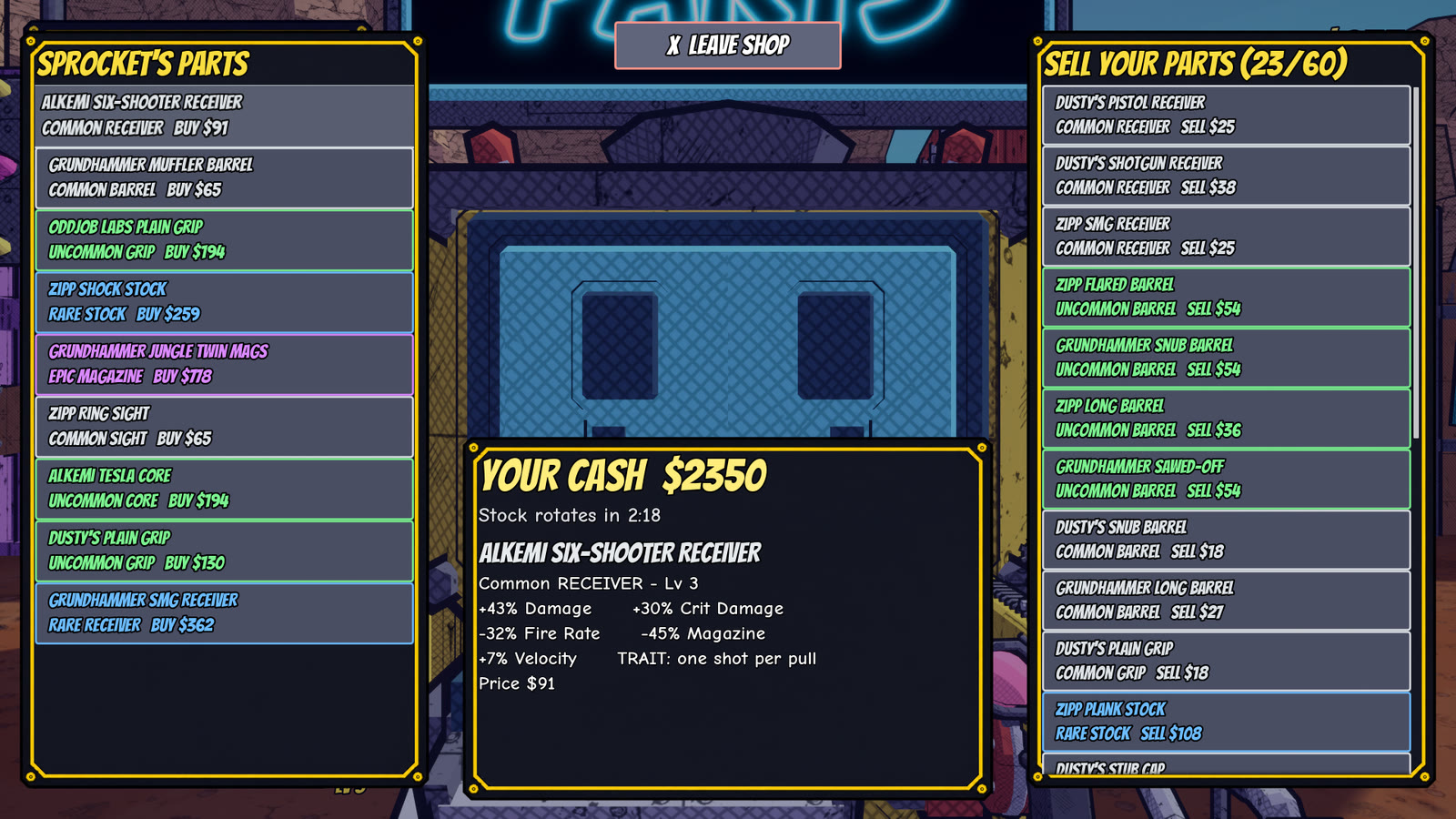
The first turn was playable from title screen to boss kill: a hub town of shipping containers and neon, a canyon of wrecked machines, a bandit camp and a boss arena. It had 5 receivers, 37 part templates, 5 rarities, 5 manufacturers and 10 powers, all in one data file so more parts are a row each. It also had a workbench with an exploded view of the gun and green and red stat changes on hover, a parts vendor with rotating stock, a gun vendor, shields, crits, damage numbers that pop like comic lettering, four enemy types and a three-phase boss. The enemies were placeholder scrap-bots built in Blender, and five character designs went to art review, for us to approve before anything paid was generated.
Turn 2: the first web build failed, and why
The first web package didn't compile. The web target is compiled with clang through Emscripten, with warnings treated as errors, and that is stricter than the Microsoft compiler the Windows build uses. The game had its own function called NotifyHit, for hit markers, which happened to share a name with one of Unreal's. Windows let it through. The web compiler stopped on it.
We sent the error back as the next turn. The agent worked out that the function had never been meant as an override, renamed it, checked the rest of the code for the same pattern and built the web package itself until it finished. It changed three files and nothing about how the game plays. Since then every 5.9 turn is told to run a web package after C++ changes that touch class declarations, not only at the end, so this kind of error shows up inside the turn that causes it.
Turn 3: real characters and a deeper loop
With all five designs approved, the agent generated the Rivet Gang (a masked rusher, a gas-masked gunner and a drum-armoured heavy), the boss King Clunk (a robot built around a truck cab) and Sprocket, the shopkeeper with a screen for a face. Each was rigged with 7 to 10 animation clips, given the same toon material and ink outline, and swapped in for the placeholders.
The same turn kept going: enemy behaviours per type (rushers flank and dodge when aimed at, gunners use cover and lob grenades, heavies shield-charge with a weak point above the shield), a boss with a furnace core to hit, a leap with a landing marker and a "STUCK" window after it, 17 new parts for 54 in total, a perk pick on each level-up, and a second lap two levels tougher after the boss. It finished with the Windows build and a Shipping web build both compiling.
Turn 4: "the bad guys' sounds are bad"
That was close to the whole prompt, plus a request for voice lines. The agent measured what was there before changing it: the enemy gunshot peaked at -43 dB, so it was effectively silent; enemy sounds were up to 30 dB apart; and nothing was positioned in 3D. It rebuilt the set, levelled it, put world sounds in 3D, and gave every enemy type a voice of its own, 98 spoken lines with subtitles in all. Lines take turns, important calls cut in over banter, and the music dips while someone talks. The agent can't listen, and said so: the videos it sent were for us to judge by ear.
Turn 5: what playing it in a browser turned up
Up to here the agent had never played the web build. It can compile it and check the files, but it plays its games on the workstation, not in a browser. So we played it ourselves in Chrome, and found two problems that only exist on the web. Pressing B didn't close the workbench, and pressing Esc to leave a screen threw us out of the game's full-screen mode instead.
The B key turned out to be two bugs: only the gamepad's B button was wired, and the screen lost keyboard focus after you fitted a part. Esc can't be fixed by the game at all, because the browser keeps that key for itself. So the fix was a visible LEAVE BENCH and LEAVE SHOP button on every screen that needed Esc, plus B, Backspace, Tab and E as keys that close them, and pause on P or Tab in the browser. A small change, and the kind a desktop game never needs.
What does it take to play?
A desktop browser with WebGPU. We test in Chrome, which Epic also recommends, and Edge runs the same engine. The page checks for WebGPU first, and the arcade and directory show a notice instead of the game on browsers without it and on phones and tablets. The vbgnt launcher apps leave web-only Unreal games out for now.
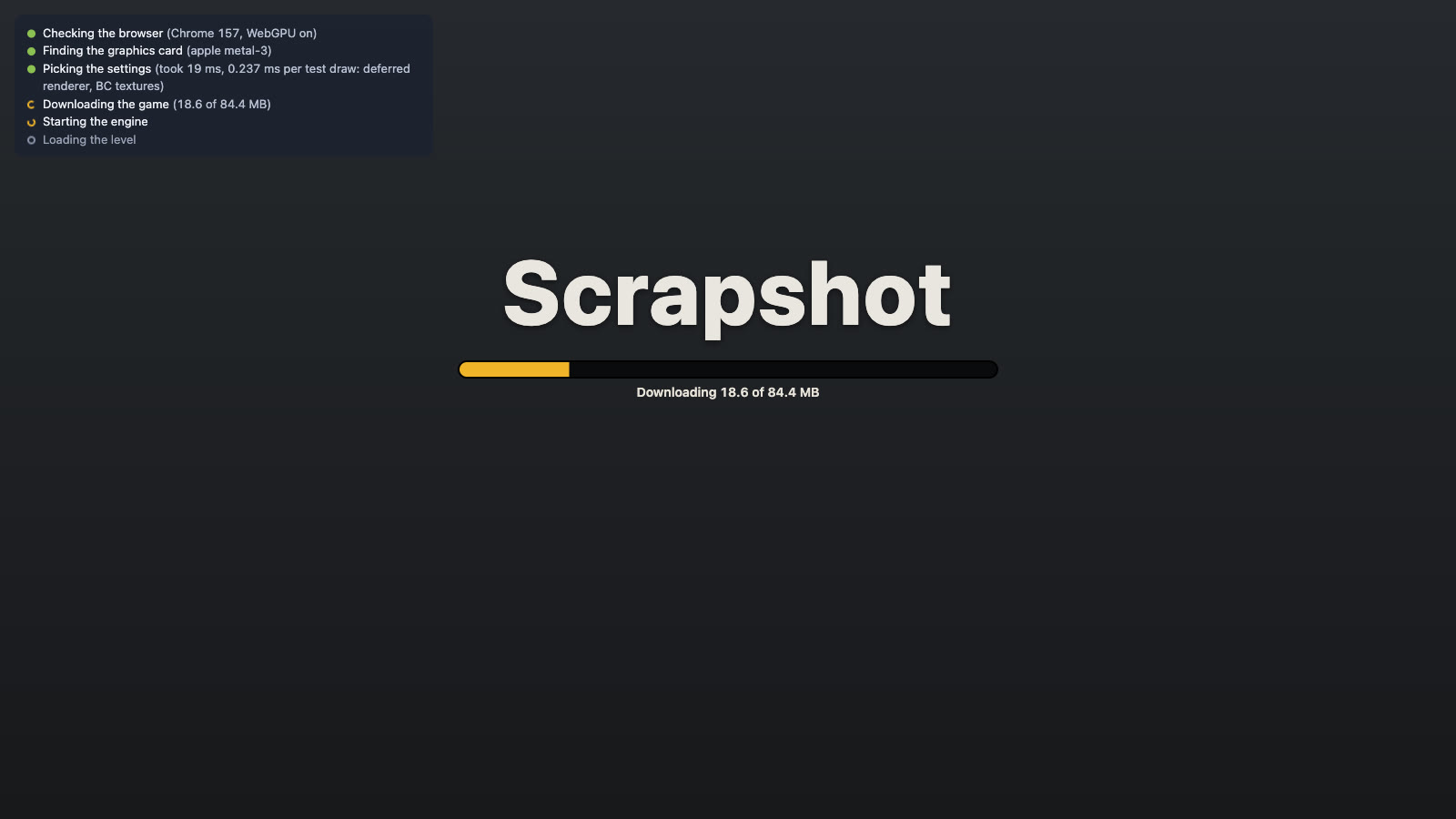
Then a download. Scrapshot's Shipping build is about 141 MB of WebAssembly and 60 MB of game data on the server, and the page fetched 84 MB on our first visit. How long that takes depends on your connection; ours was a slow 8 Mbit/s and took about a minute and a half. A second visit was ready in two seconds, because Unreal's service worker keeps the files.
What doesn't it do yet?
- No Lumen or Nanite. The web build uses Unreal's mobile renderer. A game that leans on bounce light or film-quality meshes will look different in a browser. Scrapshot was designed for it from the brief; a game meant for the web should say so in its first prompt too.
- No phones yet. Unreal can cook phone textures for the web build. We've wired that up but haven't tested it, so phones get the notice for now.
- Saves don't survive a reload. Epic lists save games and settings being lost on reload as a known issue in the preview, so the agent won't promise saves in a web build.
- Memory is tight. Epic lists a crash once the game's memory passes 2 GB. The agent is told to keep texture sizes and content lean in a game meant for the web.
- No online play in the web build. Unreal's online systems don't run in a browser, and networking on the web is its own project.
- Esc belongs to the browser. Any screen you close with Esc on desktop needs a button or another key on the web, as Scrapshot's fifth turn found.
- It's a preview. Epic released 5.9 after a short QA pass and says to expect bugs. MetaHuman rigging isn't on 5.9 in the studio yet, because our rig project is a 5.8 one. Pick 5.8 for a MetaHuman game.
Can I do this from my own assistant?
Yes, over vbgnt's MCP server. Call create_game with engine unreal and unreal_version 5.9, then prompt_game for each turn as usual. The web build is made after each turn that compiles; get_export gives its play link once it's ready, and start_export with platforms ["web"] asks for one by hand. Scrapshot was made this way, from an assistant, turn by turn.
Frequently asked questions
Can Unreal Engine games run in a web browser?
Yes, from Unreal Engine 5.9, which added an experimental web target: the game is compiled to WebAssembly and drawn with WebGPU through Unreal's mobile renderer. In vbgnt, a game on Unreal 5.9 gets a web build after every turn that compiles, hosted on games.vbgnt.com and playable in a desktop browser with WebGPU, such as Chrome.
How do I make an Unreal game that plays in the browser with vbgnt?
Pick Unreal 5.9 as the engine on the new-game form, or pass engine "unreal" and unreal_version "5.9" to create_game over MCP, and describe the game. If you want it to look its best in a browser, say so in the brief: ask for the look to be done in materials rather than with Lumen, Nanite or post-processing. The studio makes the web build by itself and lists the game in your arcade once it is ready.
Which browsers can play an Unreal web build?
Desktop browsers with WebGPU. We test in Chrome, which Epic also recommends. The page checks for WebGPU before it downloads anything, and vbgnt's arcades and games directory show a notice instead of the game on browsers without it and on phones and tablets.
How big is an Unreal web build?
Scrapshot, a first-person shooter with a hub, a combat zone and a boss arena, is about 141 MB of WebAssembly and 60 MB of game data on the server, and the browser fetched 84 MB on a first visit. A second visit was ready in about two seconds, because Unreal's service worker keeps the files.
Does the web build look the same as the desktop game?
Not always. The web build uses Unreal's mobile renderer, so Lumen global illumination and Nanite are not available. A game designed for it, with its lighting and outlines done in materials, can look the same: Scrapshot's agent checked its screenshots on the mobile renderer against desktop and they matched.
What can't an Unreal web build do yet?
In vbgnt today: it doesn't run on phones, save games and settings are lost on reload (a known issue Epic lists for the preview), Epic lists a crash past 2 GB of memory, Unreal's online systems don't run in a browser, and the Esc key belongs to the browser, so screens need another way out. Unreal 5.9 is a preview Epic calls unstable, and MetaHuman rigging is not available on 5.9 in the studio yet.